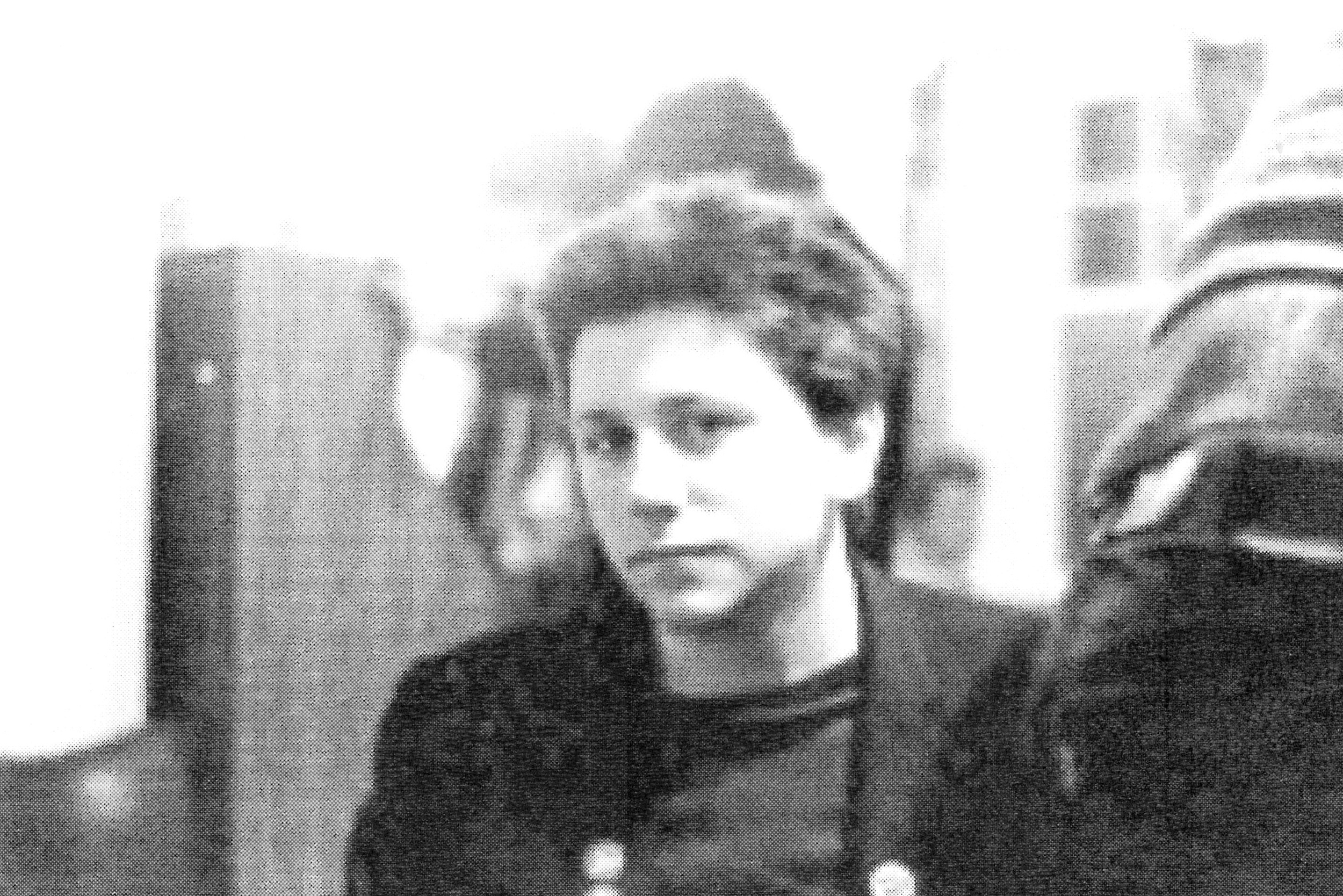
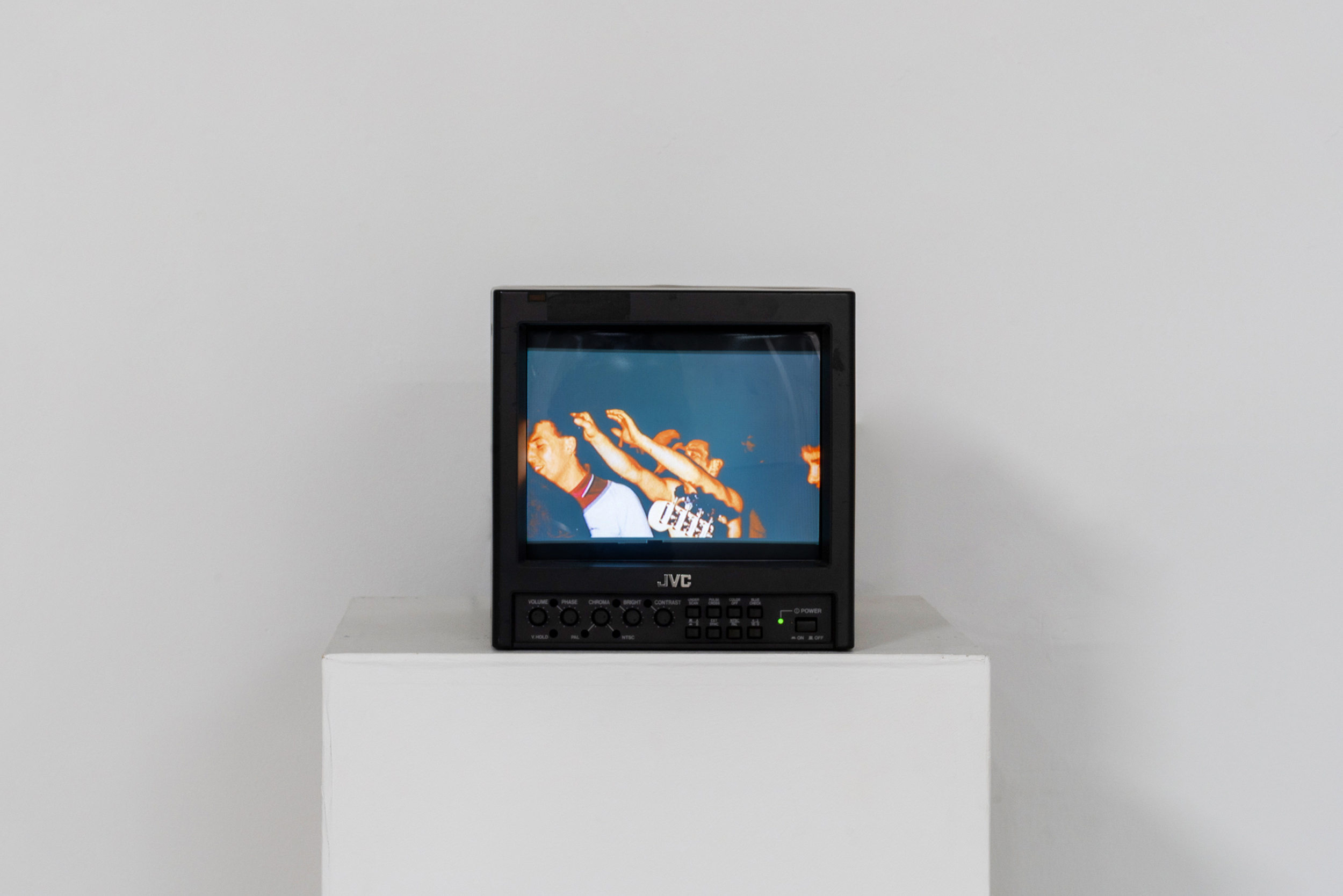

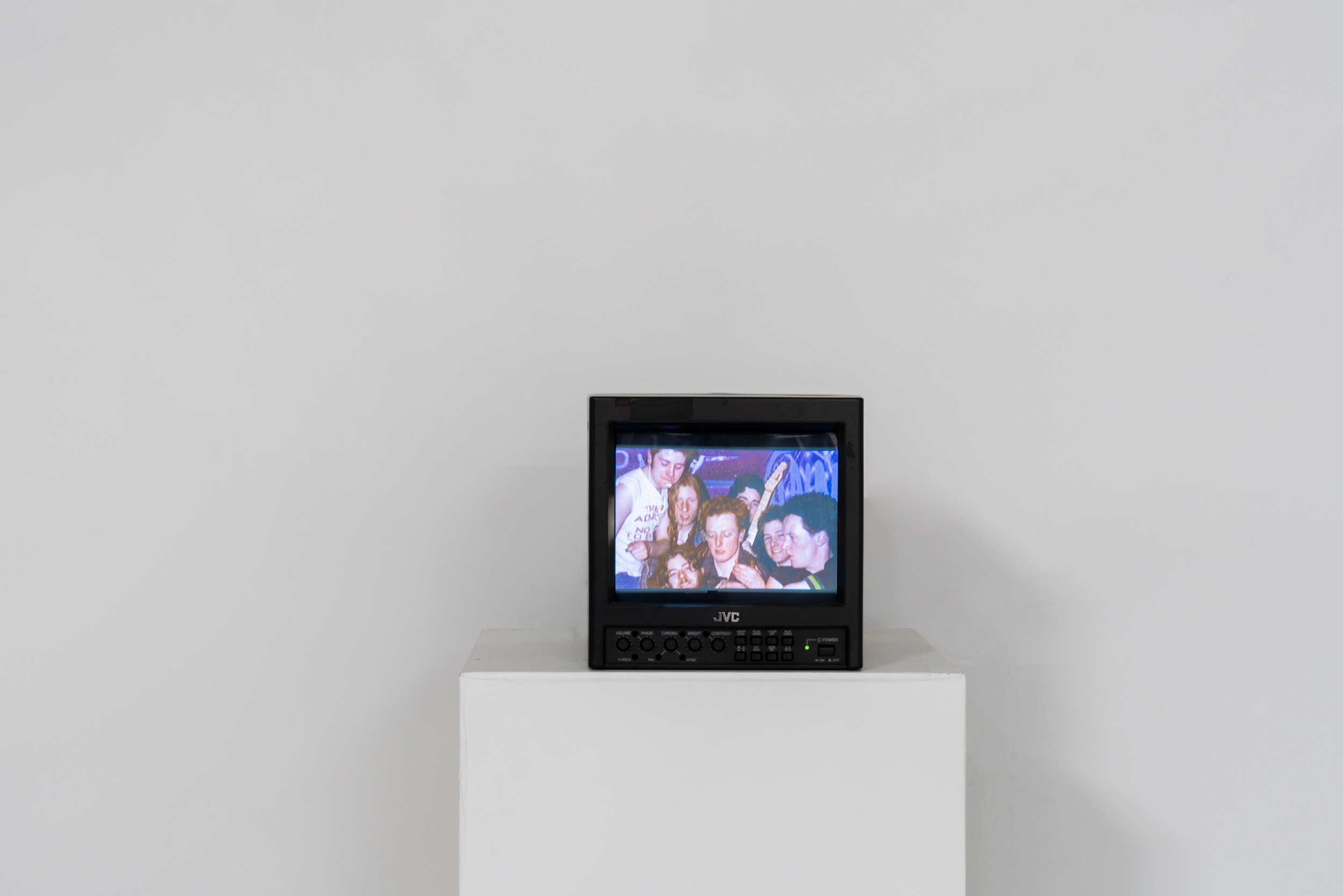
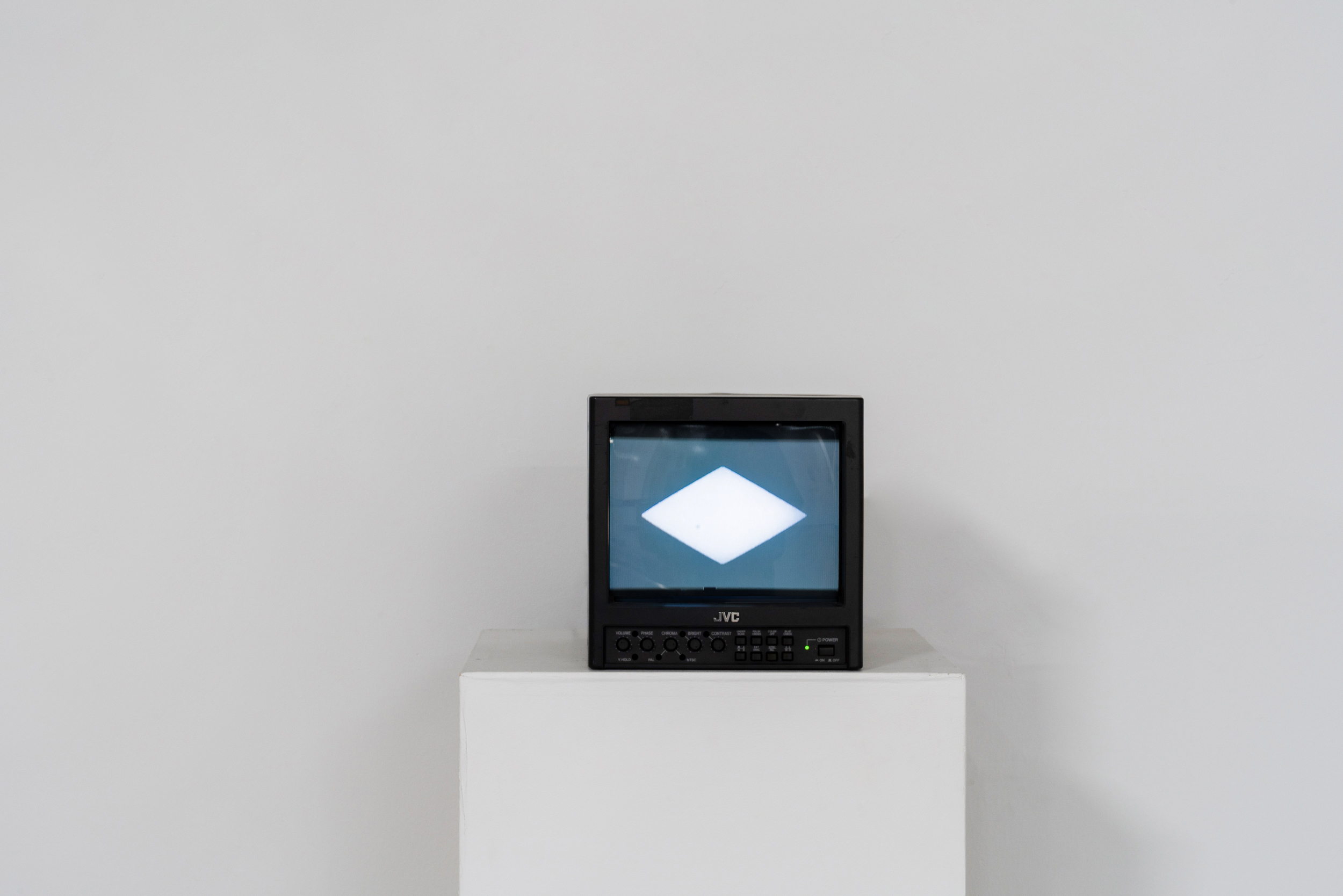
Demos (2024)
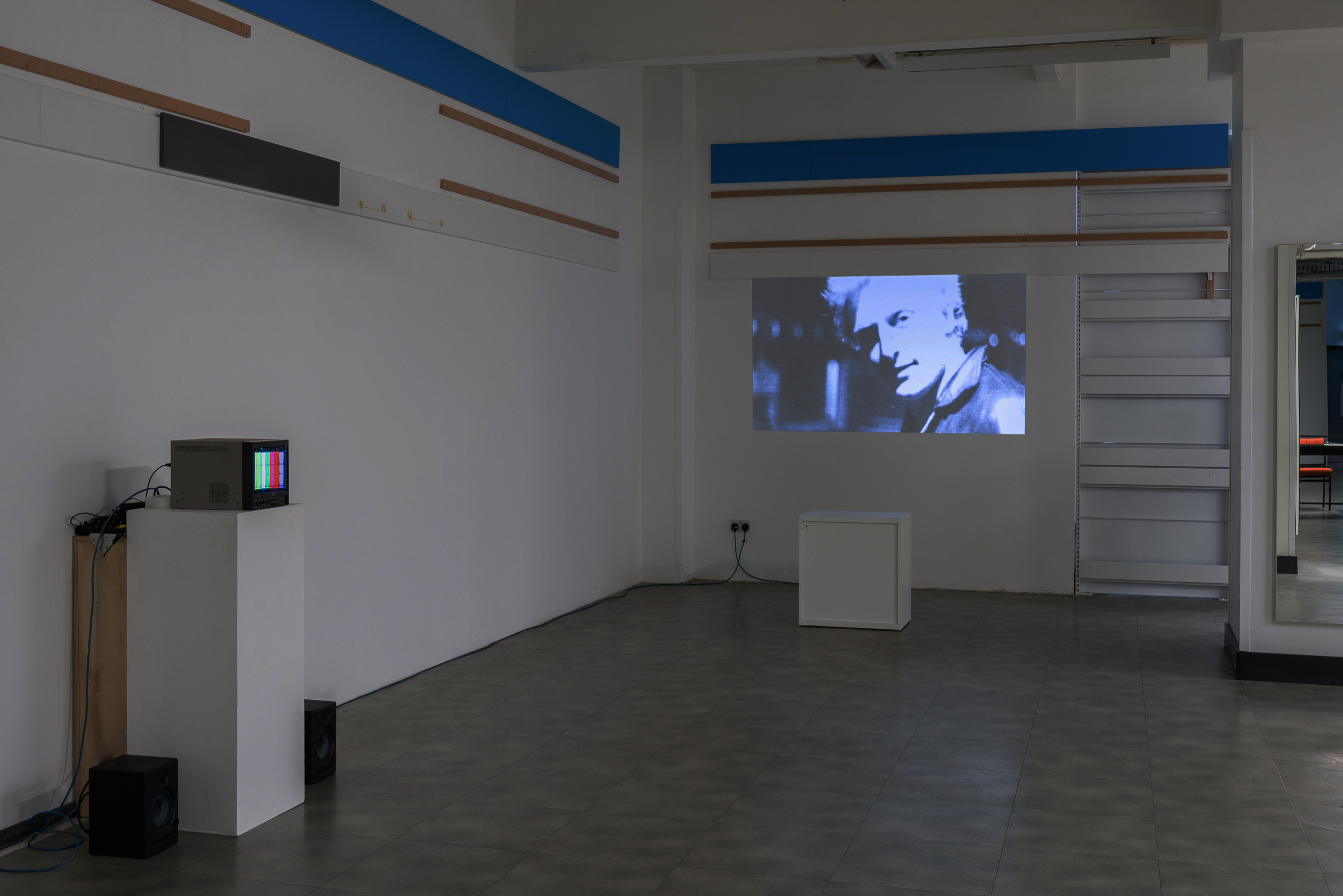
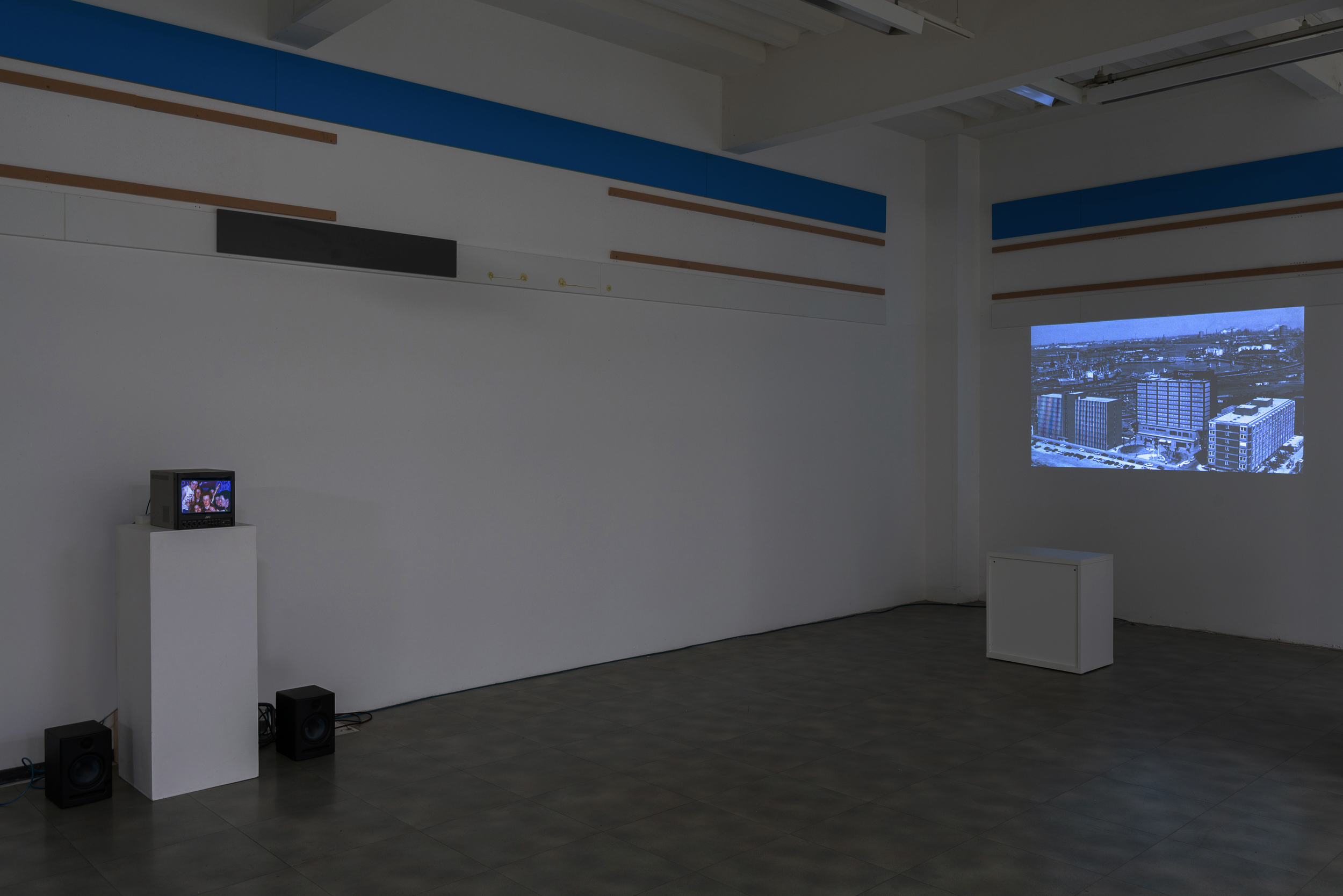
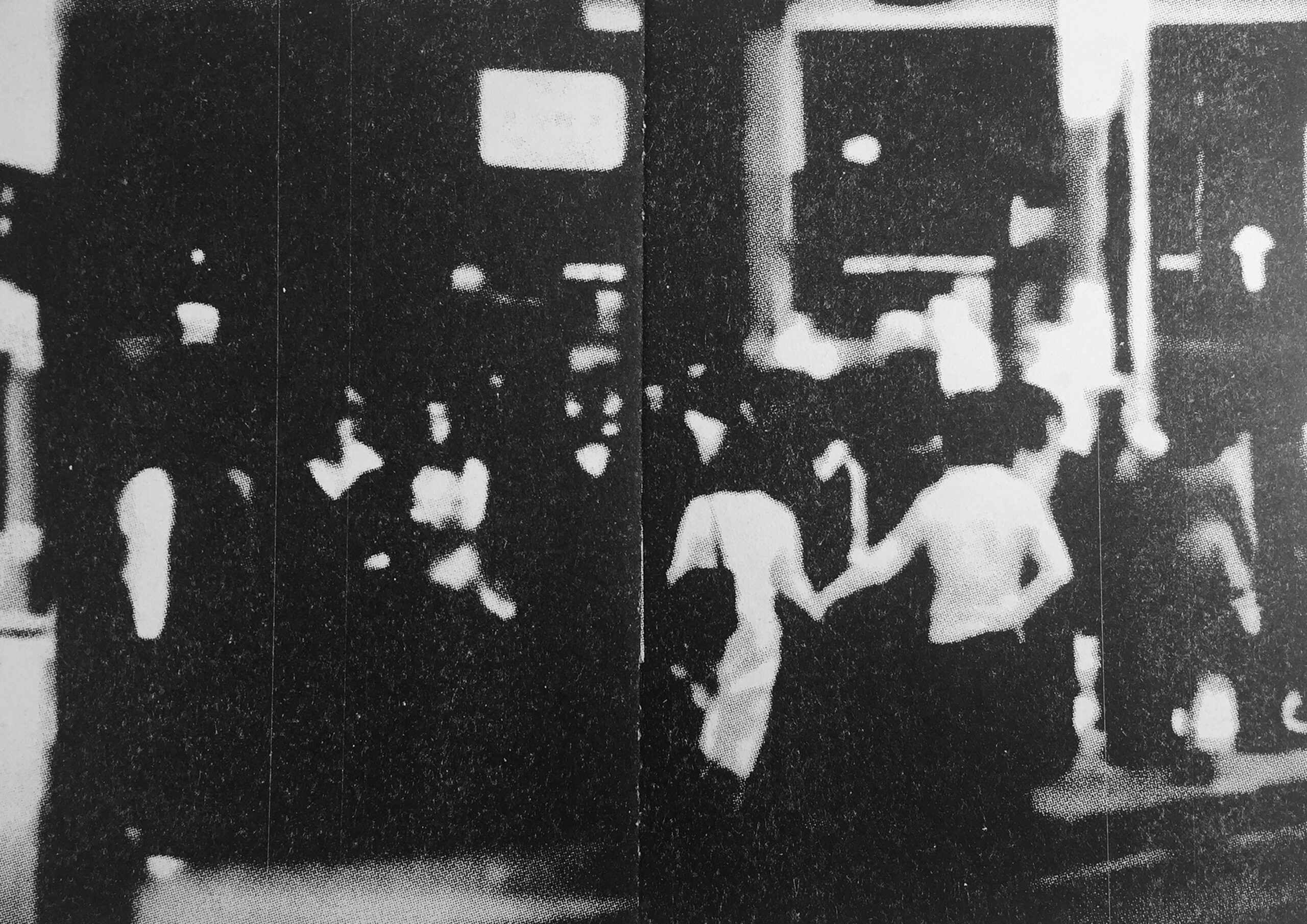
Single channel film proposals, for a project mapping Teesside’s music venues and the communities that formed around them. In 1976, against a backdrop of industrial decline, The Rock Garden ‘a failing bierkeller on the edge of Middlesborough town centre‘ (Steve Harland, FMTTM) began operating as a music venue. Performances by The Sex Pistols, The Clash, The Adverts, X Ray Spex , Joy Division and The Damned galvanised local people to start their own bands and publish their own zines. The Rock Garden closed in 1981.
Photos of Teesside band No Way and fans courtesy of Kath Callan, Paul Callan and Pete Collins. Demos was supported by Navigator North, and Teeside Archives. Test Screening – Unit 7, Dundas Arcade, Middlesbrough.
Installation photography Rachel Deakin.

Forever and Just for One Day (2022)
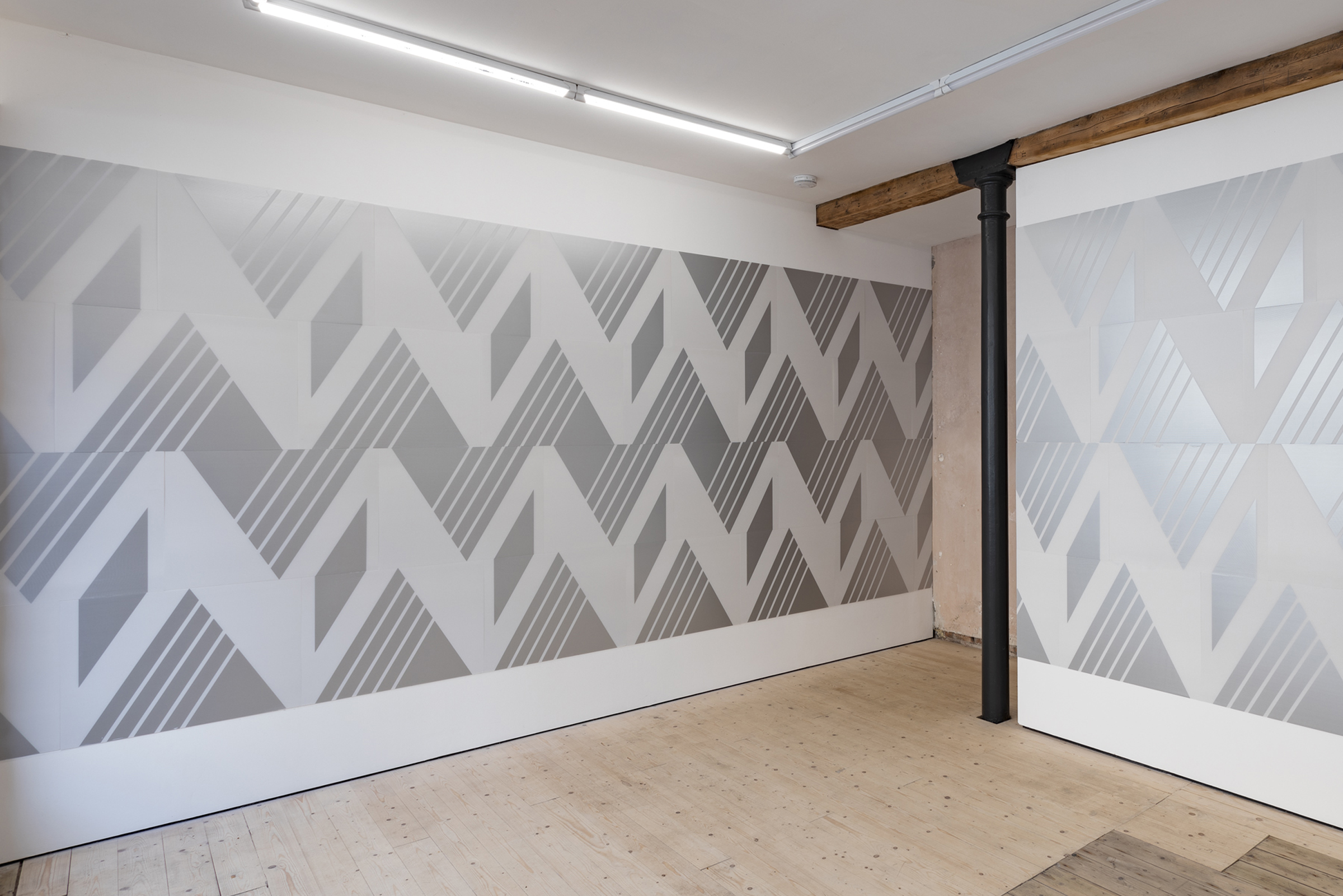
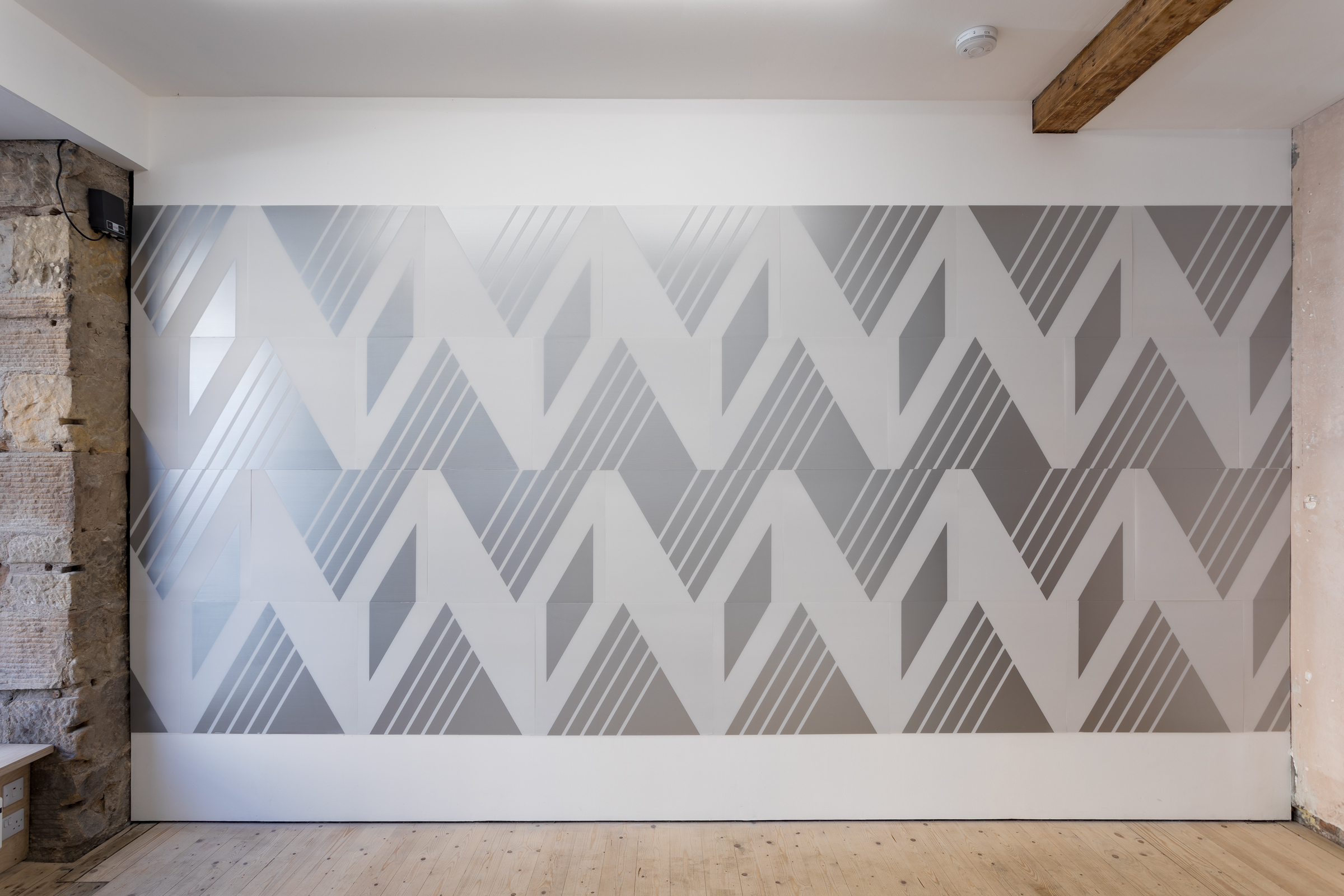
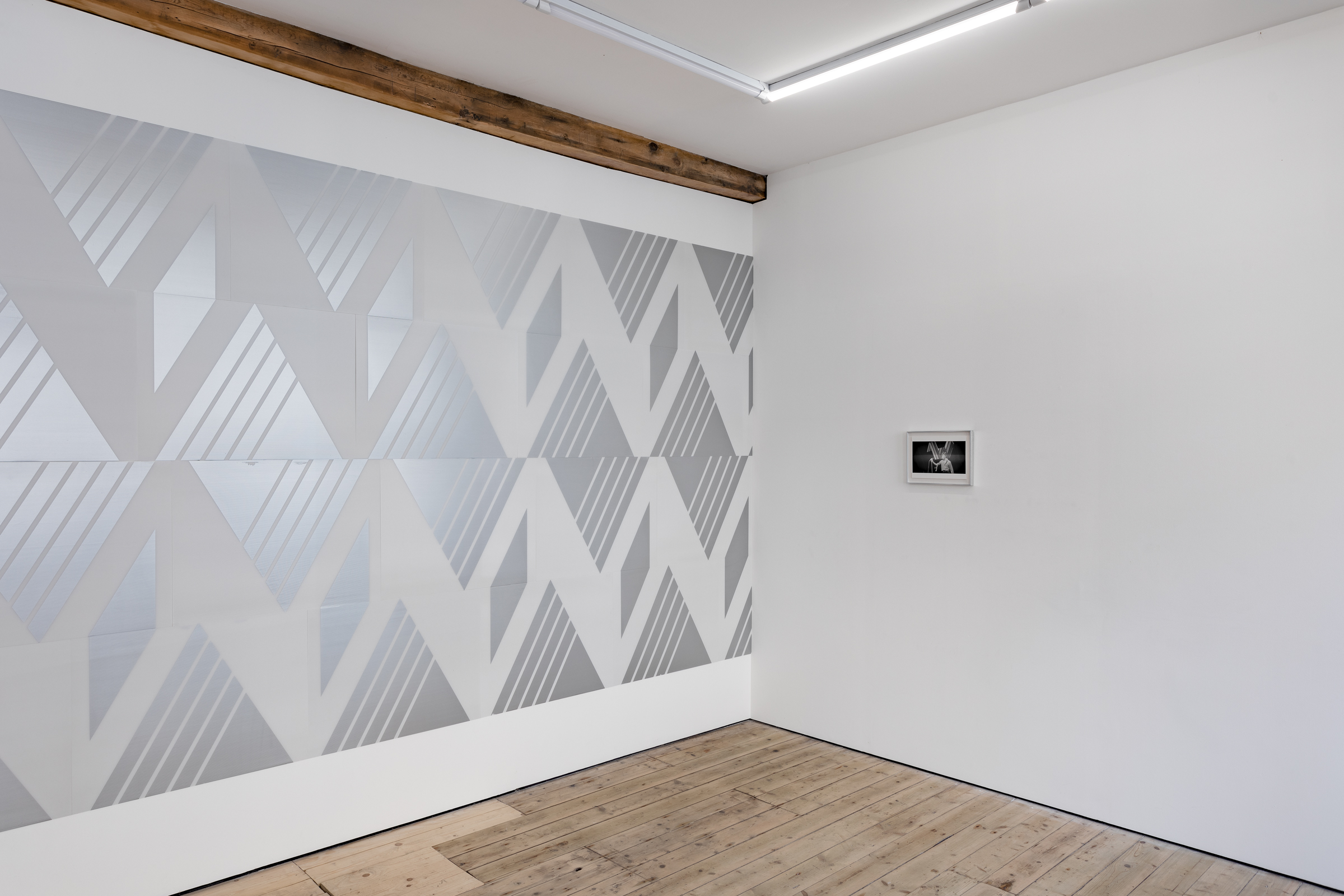
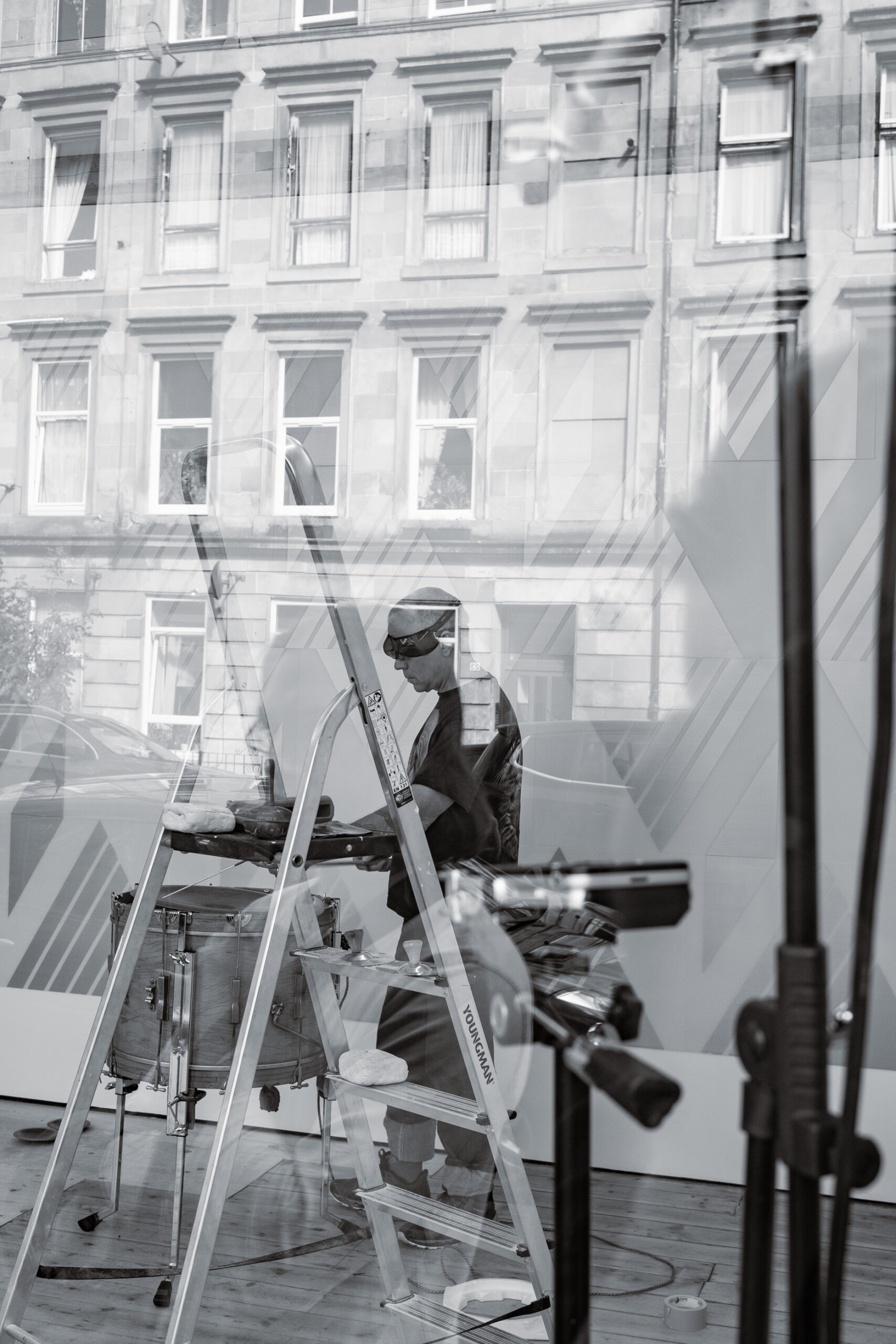
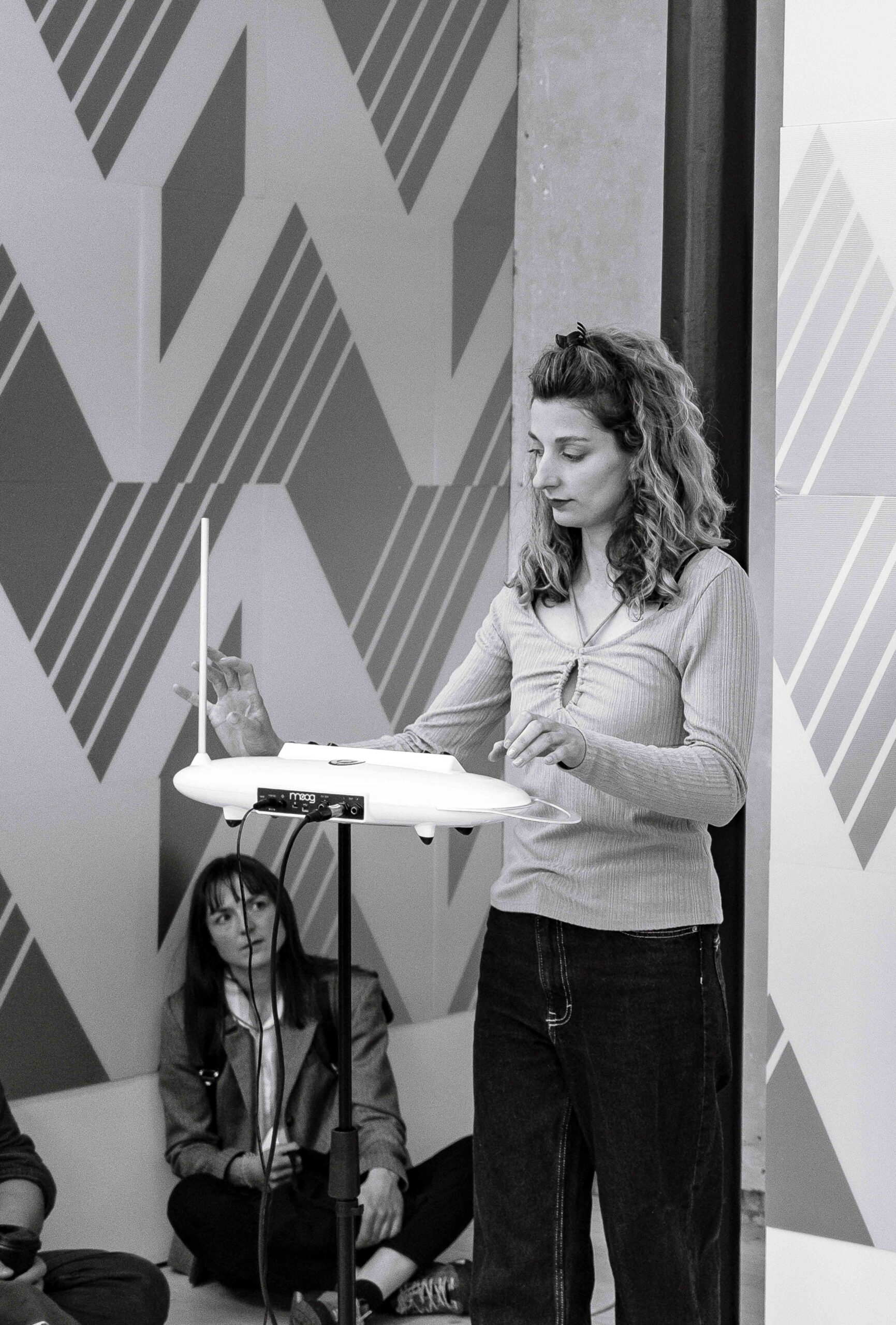
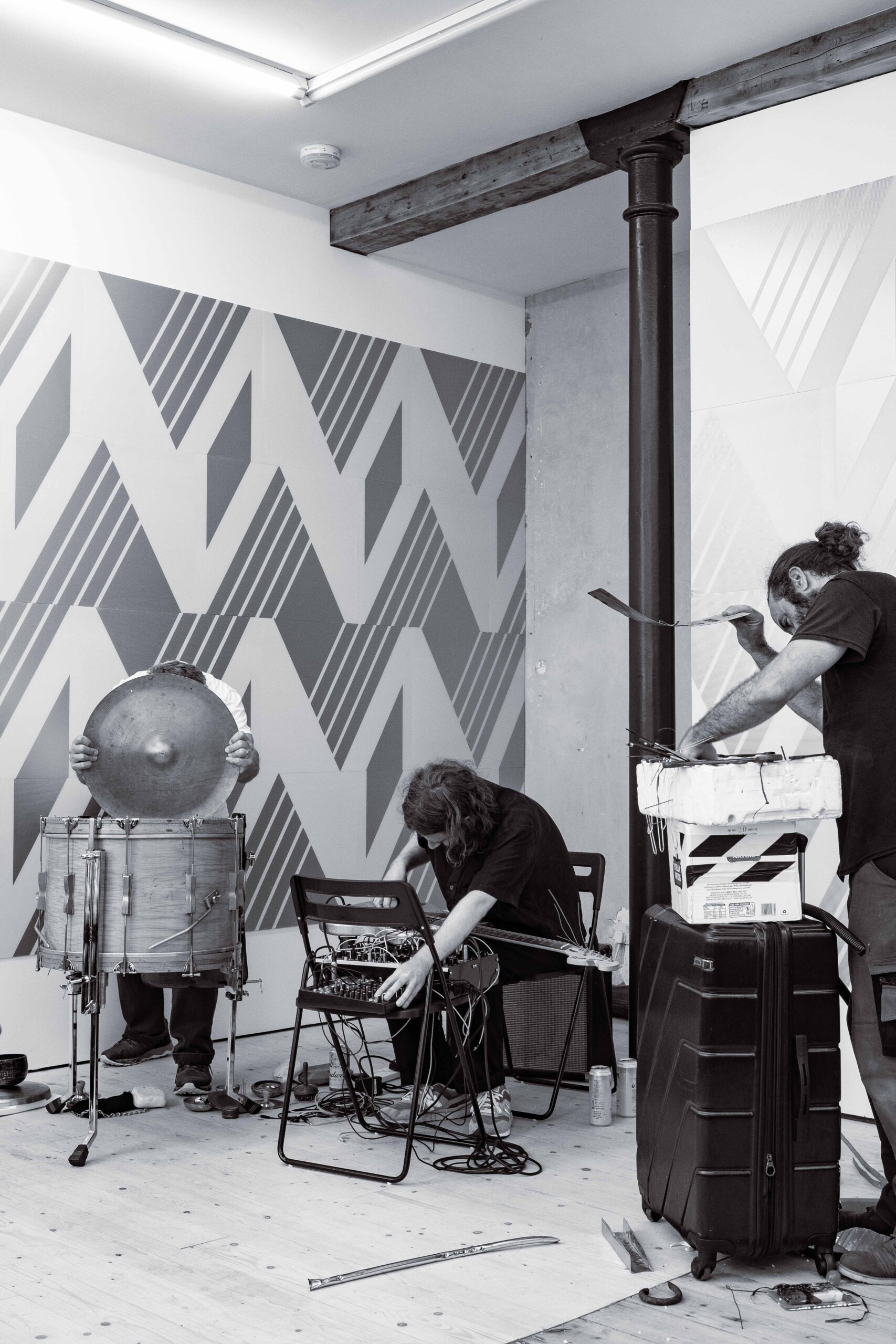
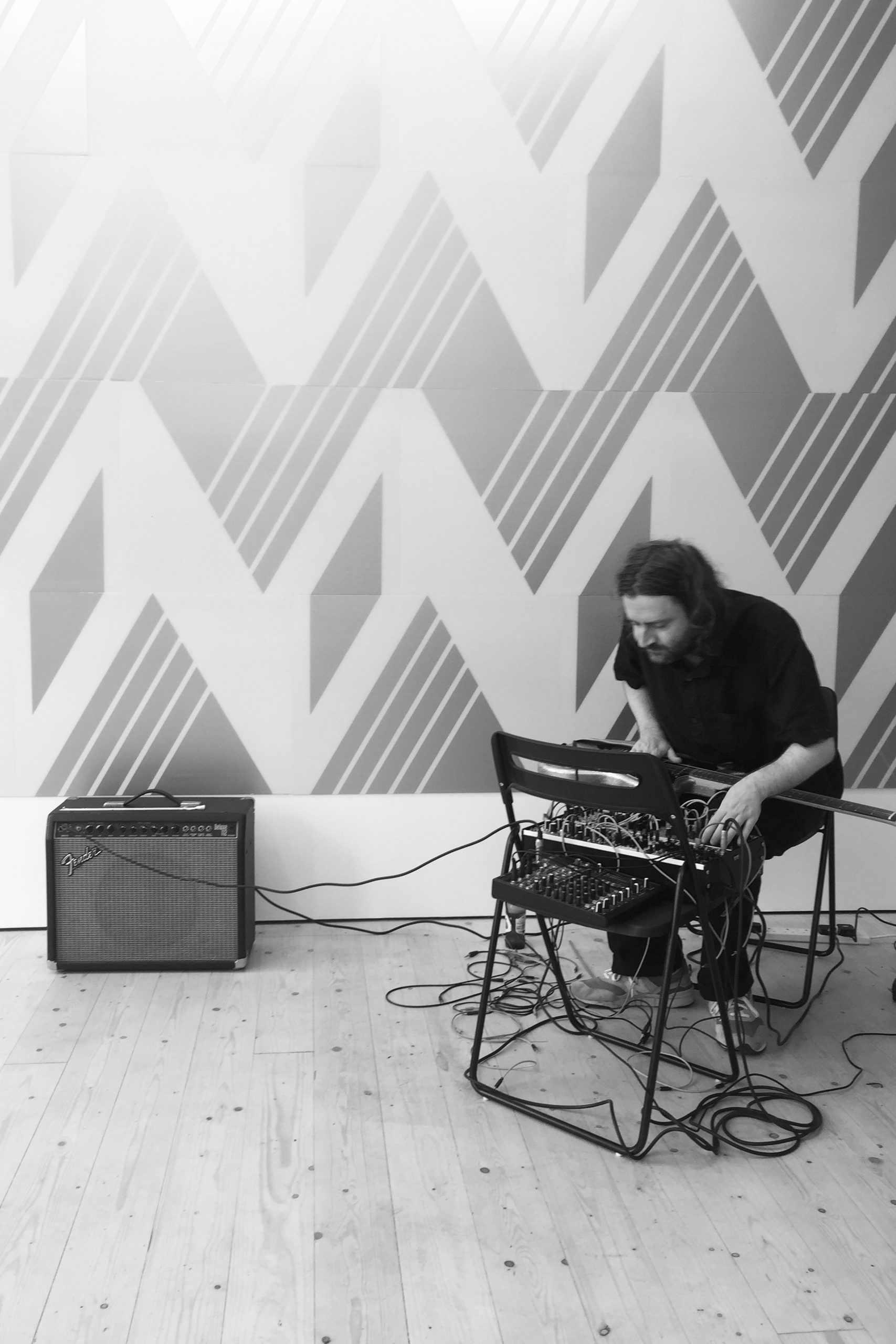
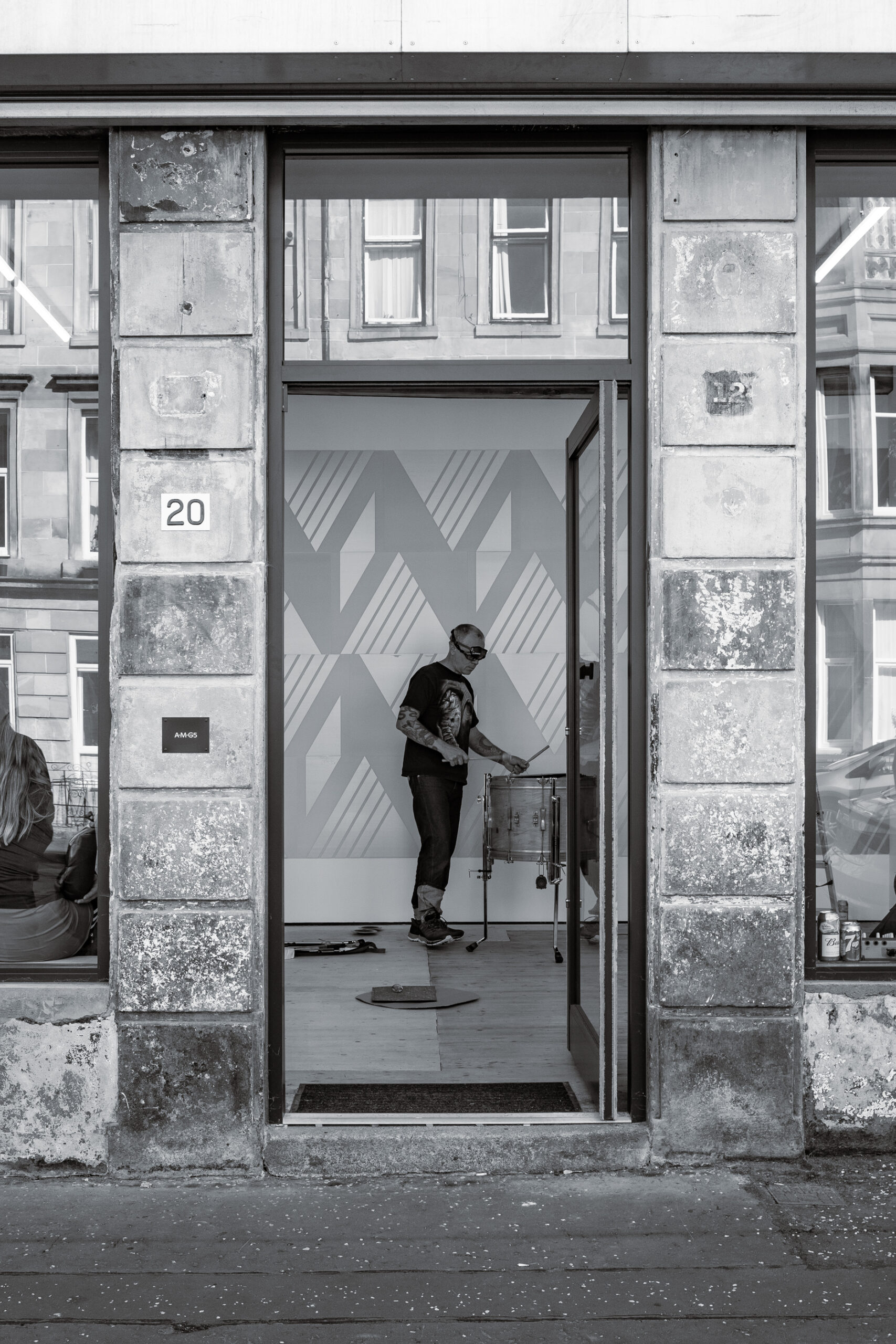
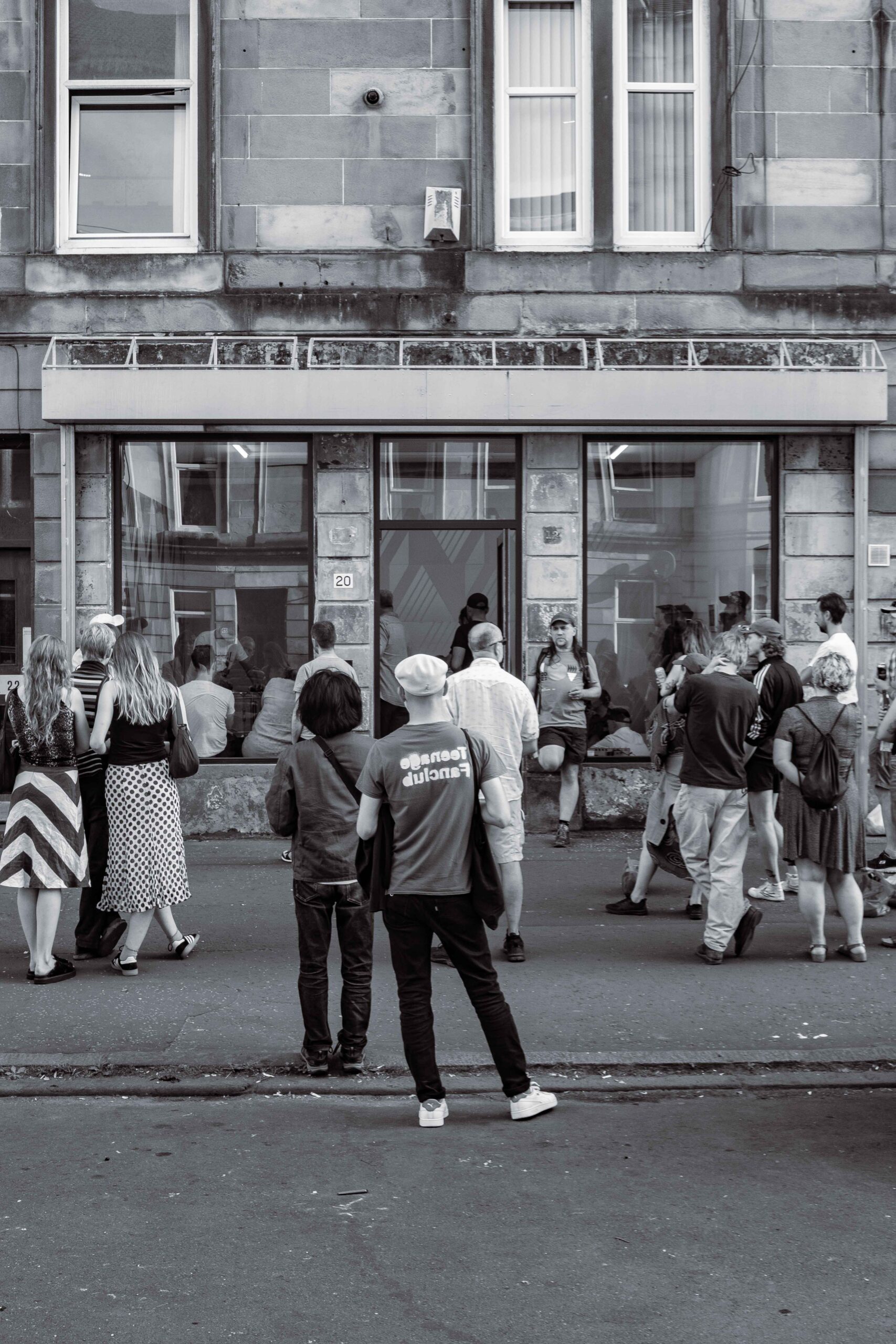
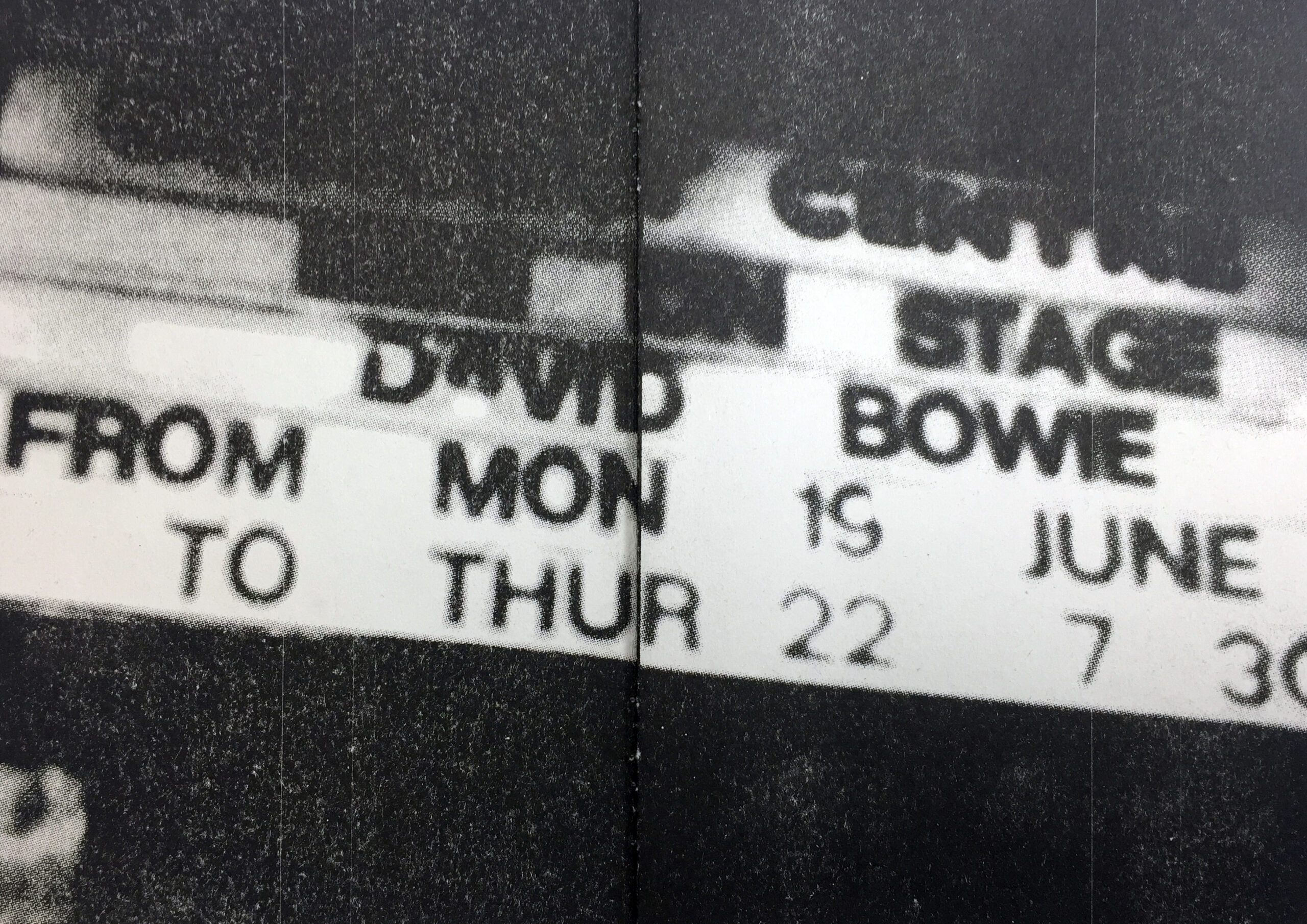
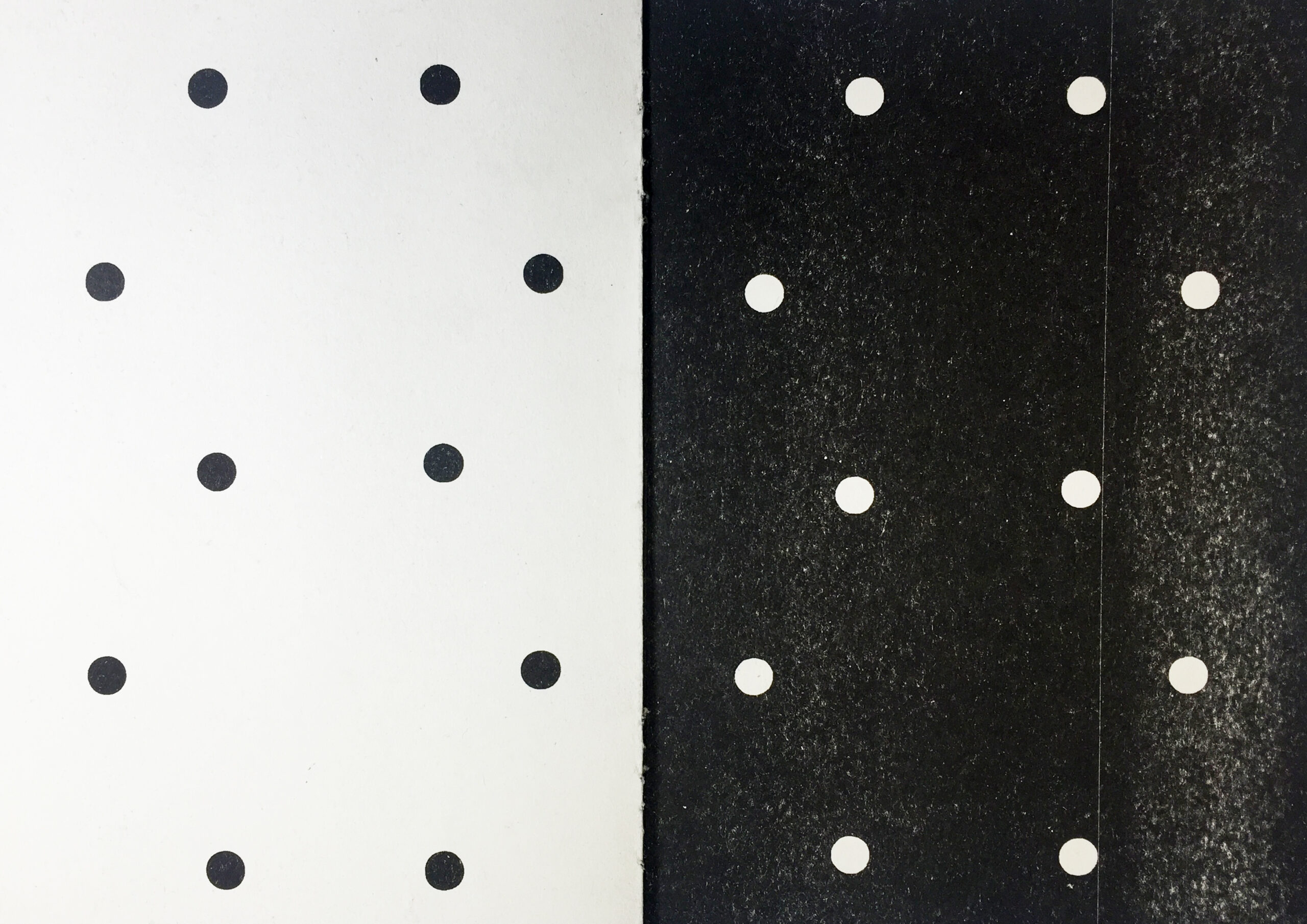
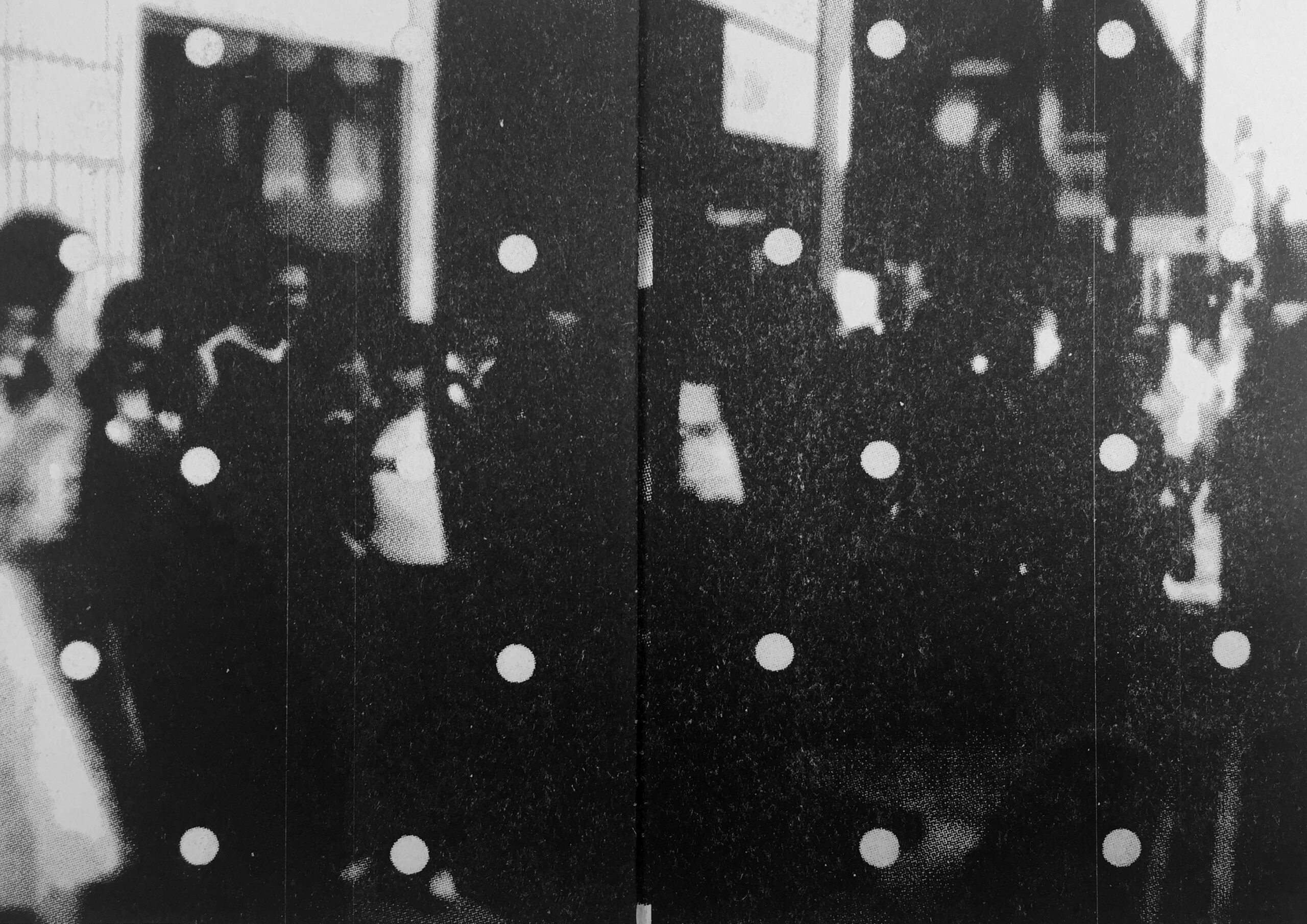
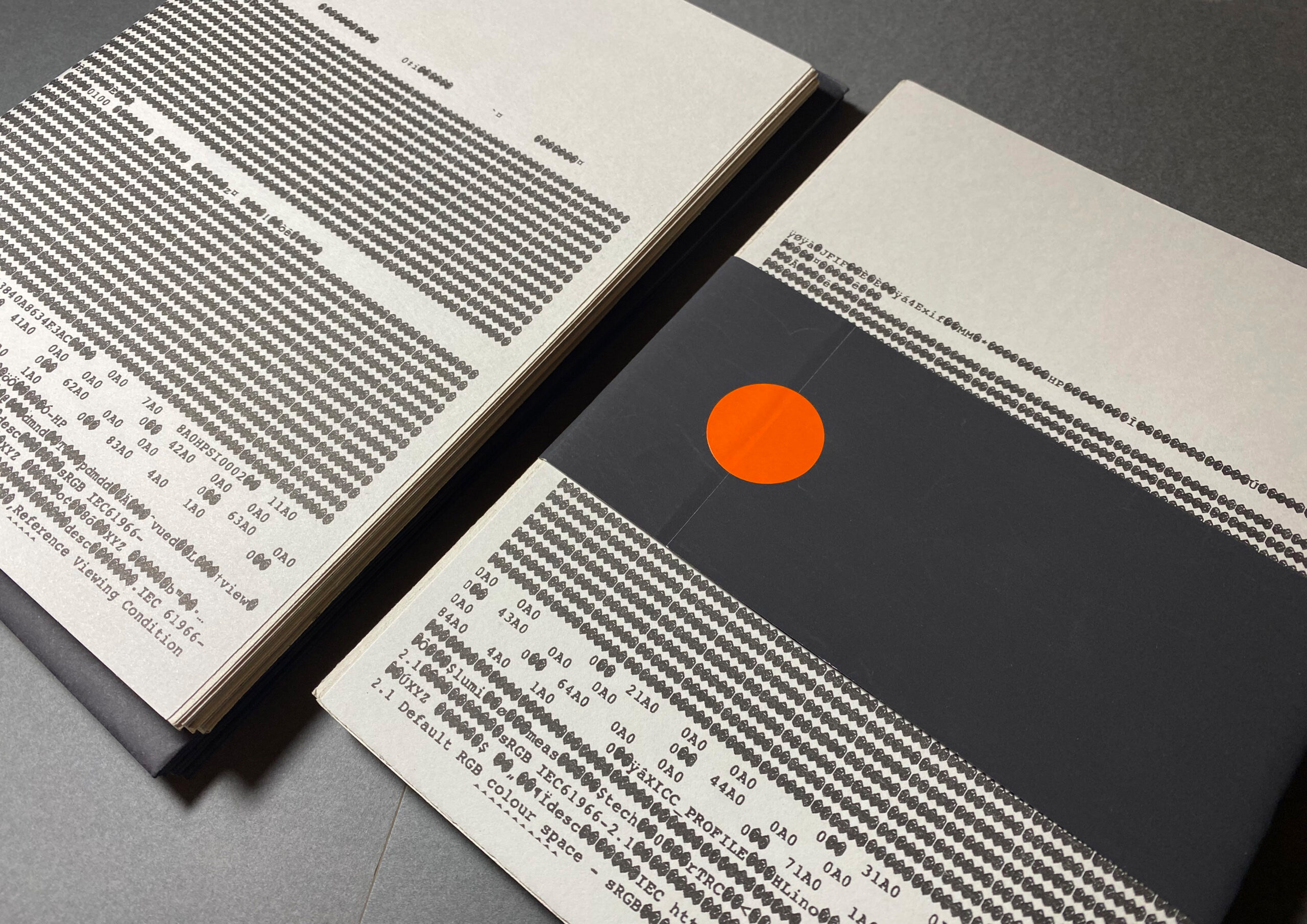
An exhibition developed using imagery connected to David Bowie’s 1977 Top of the Pops performance of the song Heroes. Screen-printed panels that were ‘part wallpaper, part painting and part stage set‘ (Andrew Mummery) functioned as a backdrop to three improvised performances at 20 Albert Road in Glasgow’s Southside. The repeat pattern was derived from a generic BBC set design, which appeared behind Bowie during his television performance. A still from that performance was used to create a single screen-printed image of the singer. An accompanying publication, drew on archival BBC Scotland news footage covering Bowie’s 1978 concerts at Glasgow’s Apollo Theatre.
The philosopher Simon Critchley has argued that David Bowie’s music expressed a truth, but one that was inauthentic, completely self-conscious and utterly constructed. It created an illusion whose fakery is not, however, false but one that can save us from ourselves, from the banal fact of being in the world. This place can be escaped, forever or just for one day (Andrew Mummery).
Performances: 6 August: Jessica Argo and Fritz Welch, 13 August: EGO DEPLETION and Benicio del Trainwreck. 20 August: Fritz Welch (solo durational performance). Programme curated by Fritz Welch.
Screen printing by M.A.R.S (Glasgow). Design assistance Ronan Devlin Studio. Risograph printing by Tiny Golden Books. Risograph designed by Alan Hathaway. Installation, performances, screen print edition and publication commissioned by AMG-5. Photography Patrick Jameson.
Exhibition dedicated to Thomas Jerome Newton.

Blue Monday (2021)
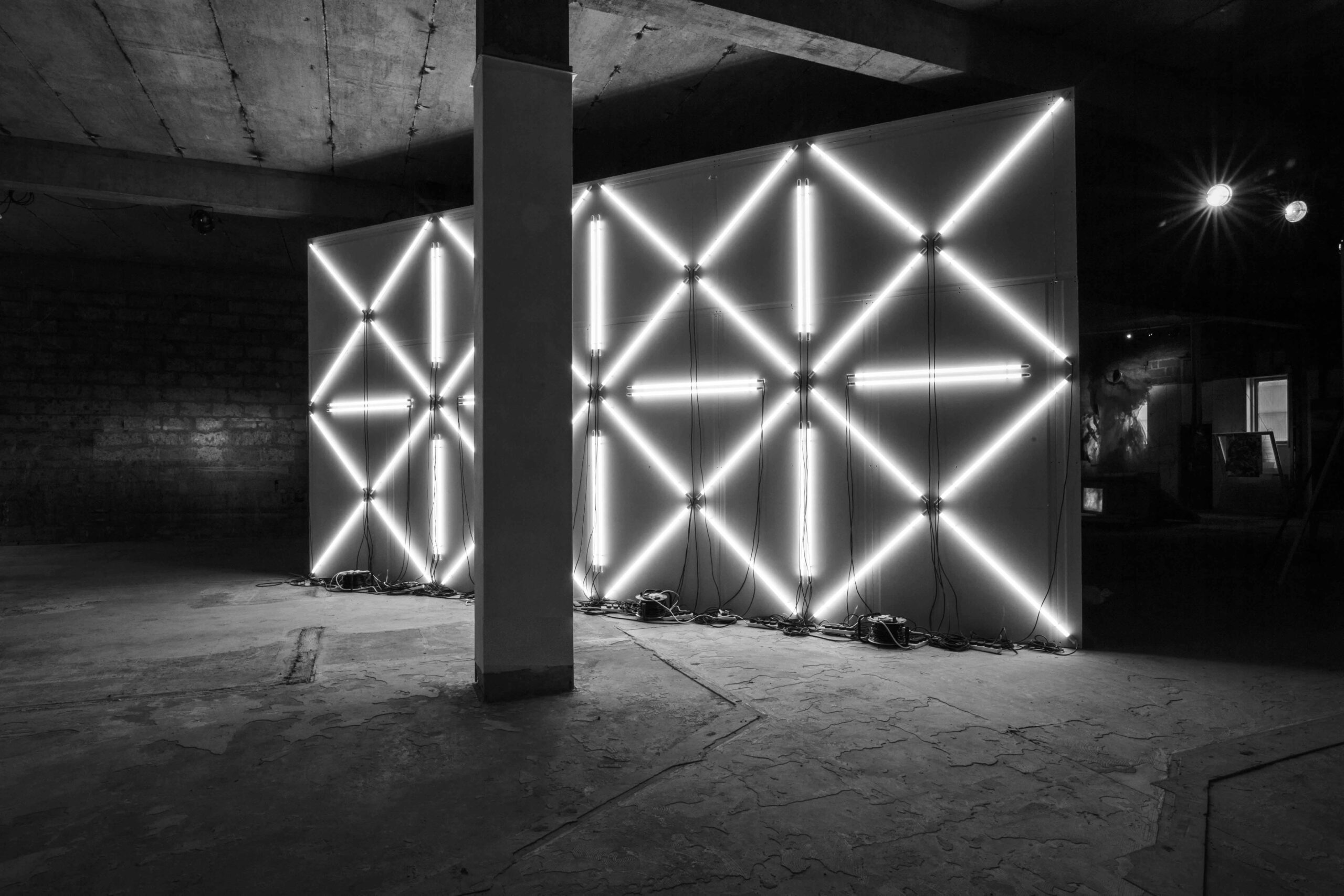
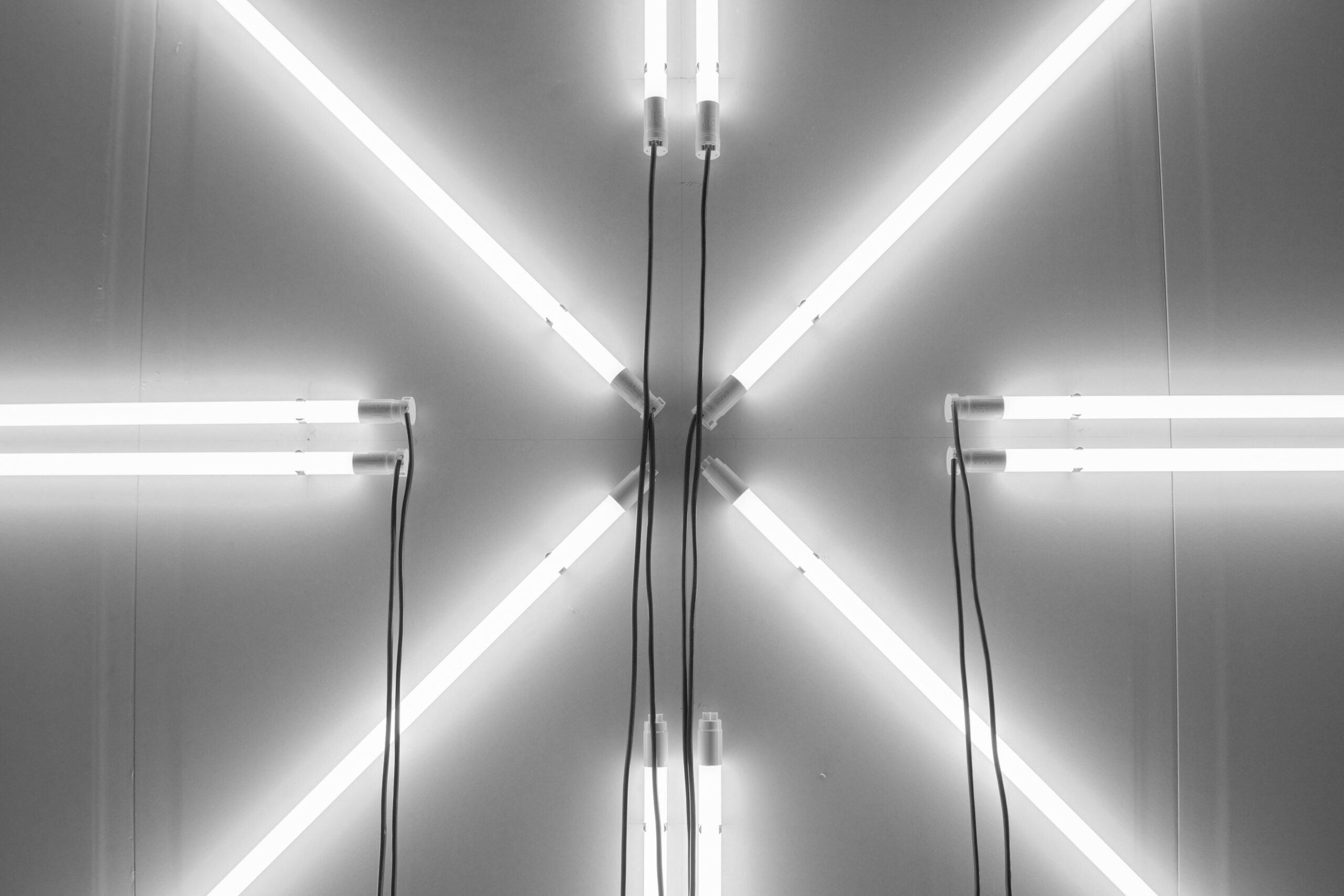
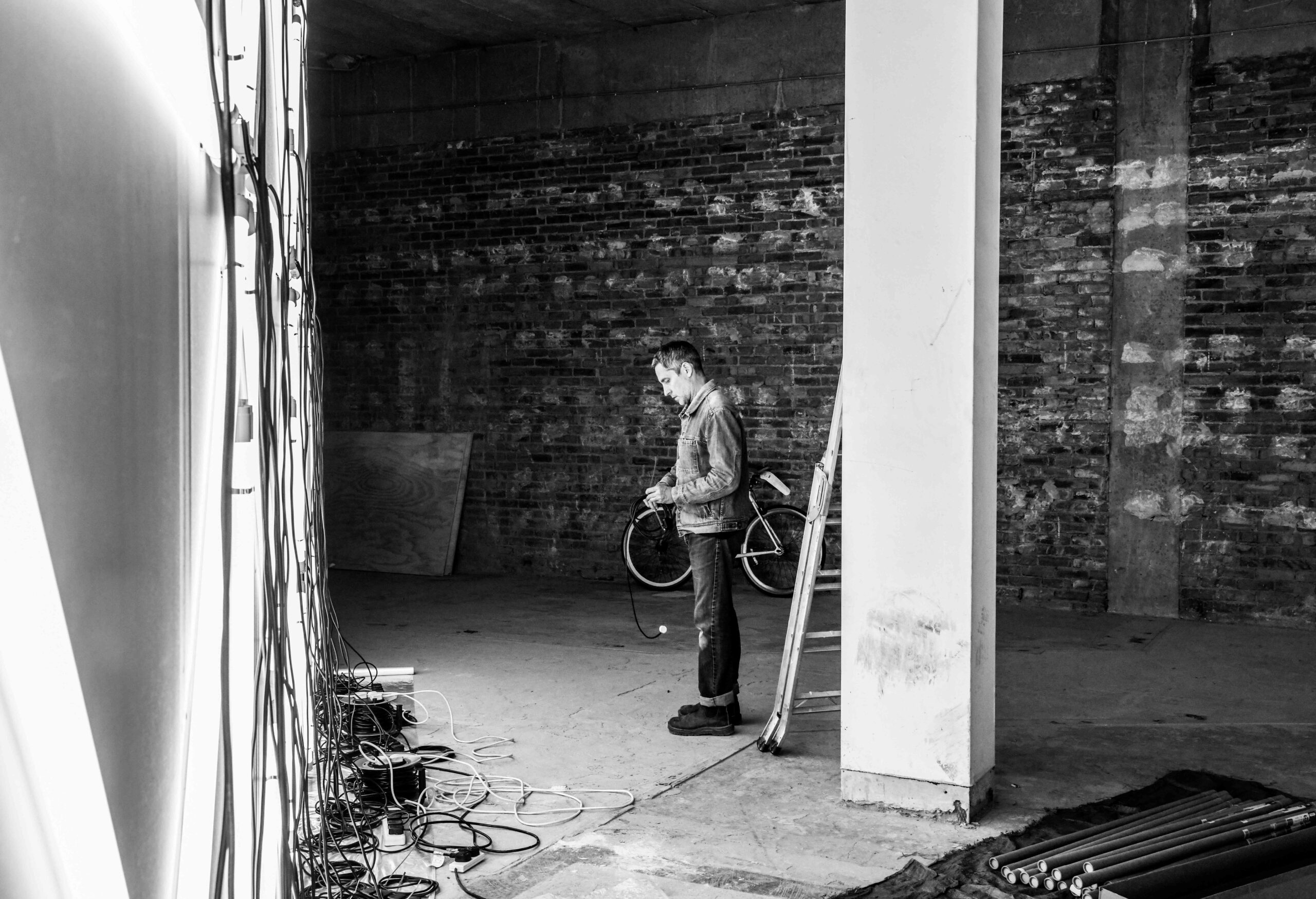
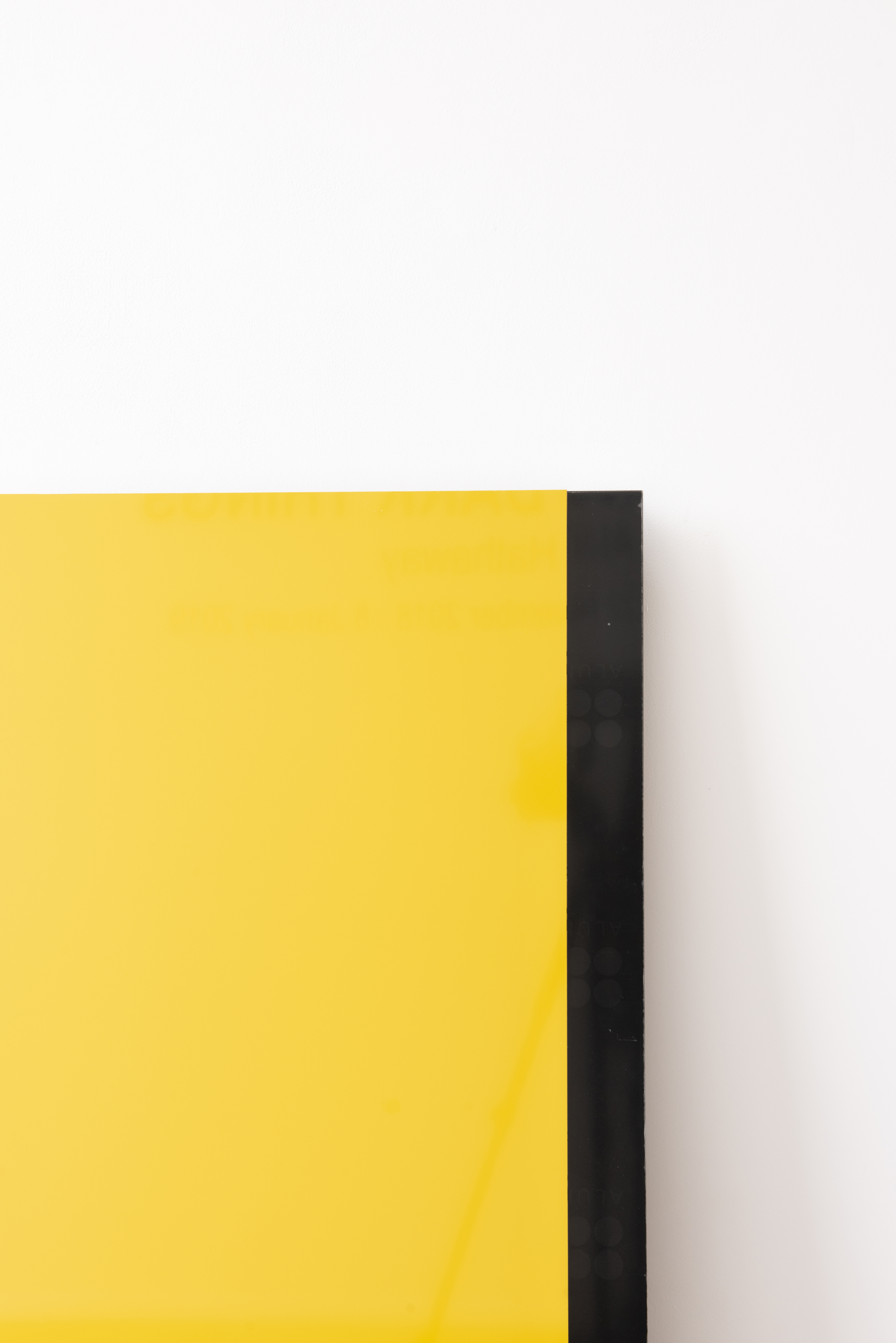
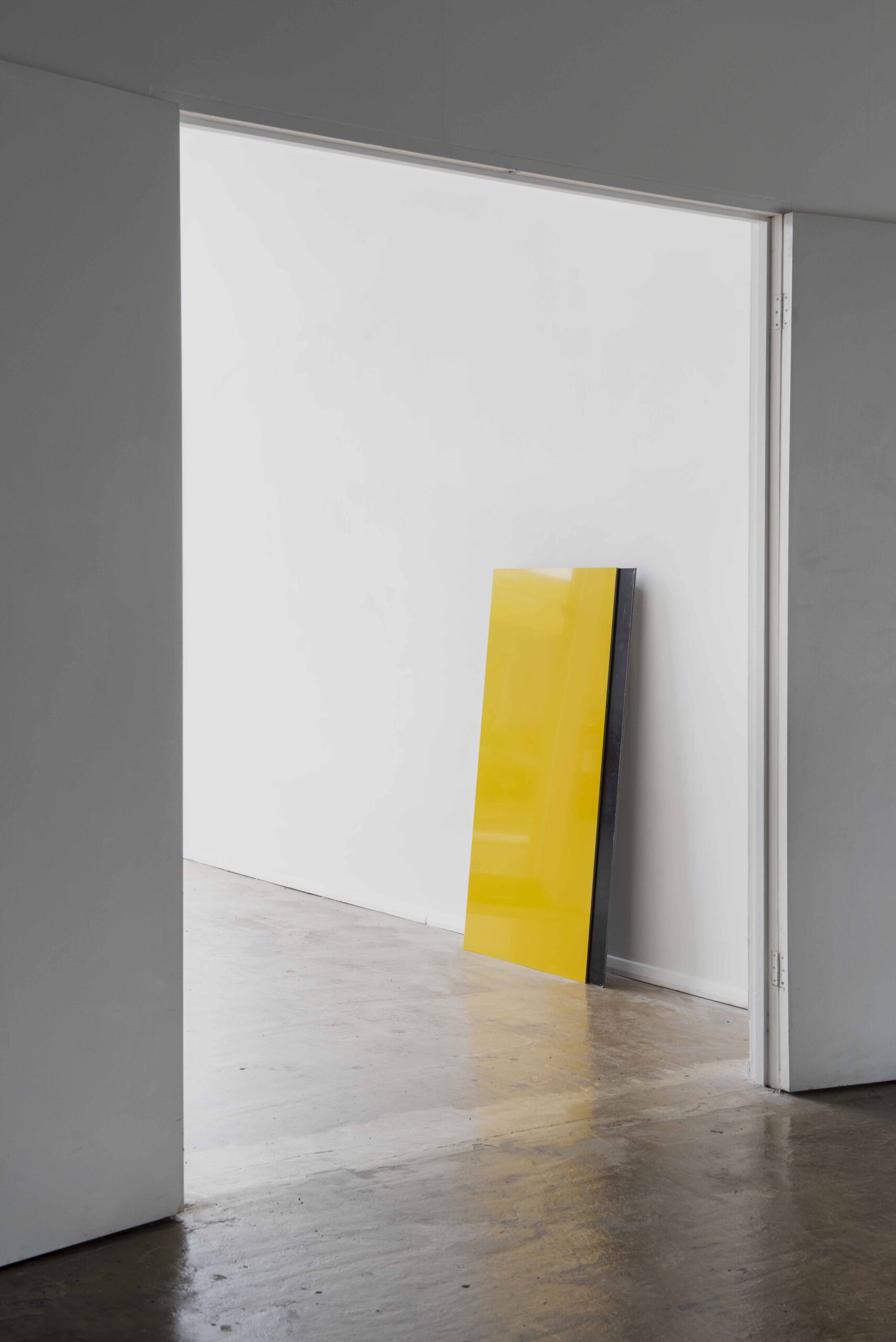
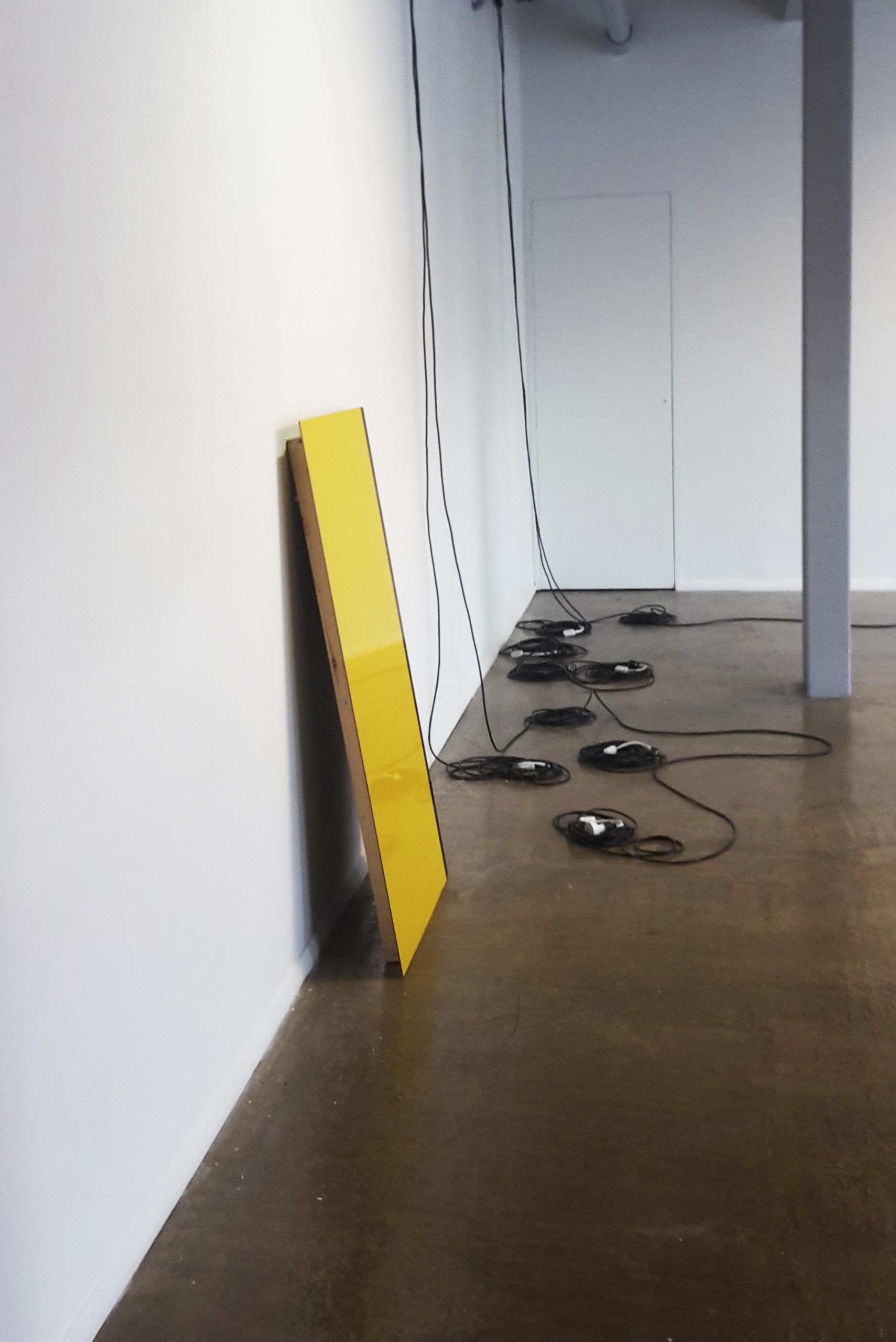
A reimagining of the Top of the Pops set design which accompanied New Order’s 1983 performance of the song Blue Monday. Shown alongside previously unseen films by Gordon Matt-Clark at Middlesbrough Art Week 2021, the work drew parallels between Matta-Clark’s use of New York’s abandoned piers for his ‘cut works’, the proliferation of club culture within the post industrial spaces of 1980’s Manchester and the temporal repurposing of dormant commercial space for MAW21.
Exhibition photography by Kev Howard and Jason Hynes. Exhibition install documentation Joanne Coates.
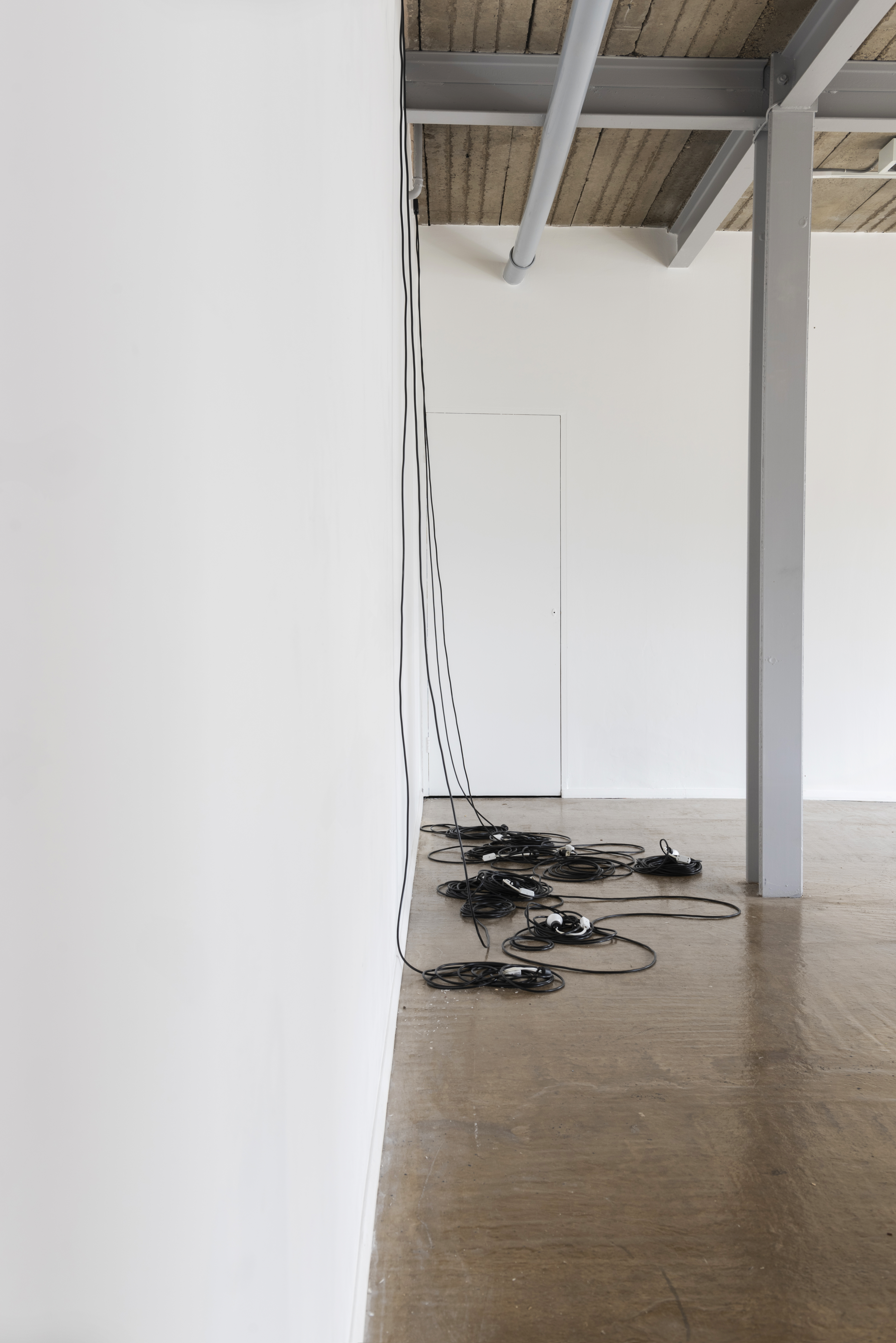
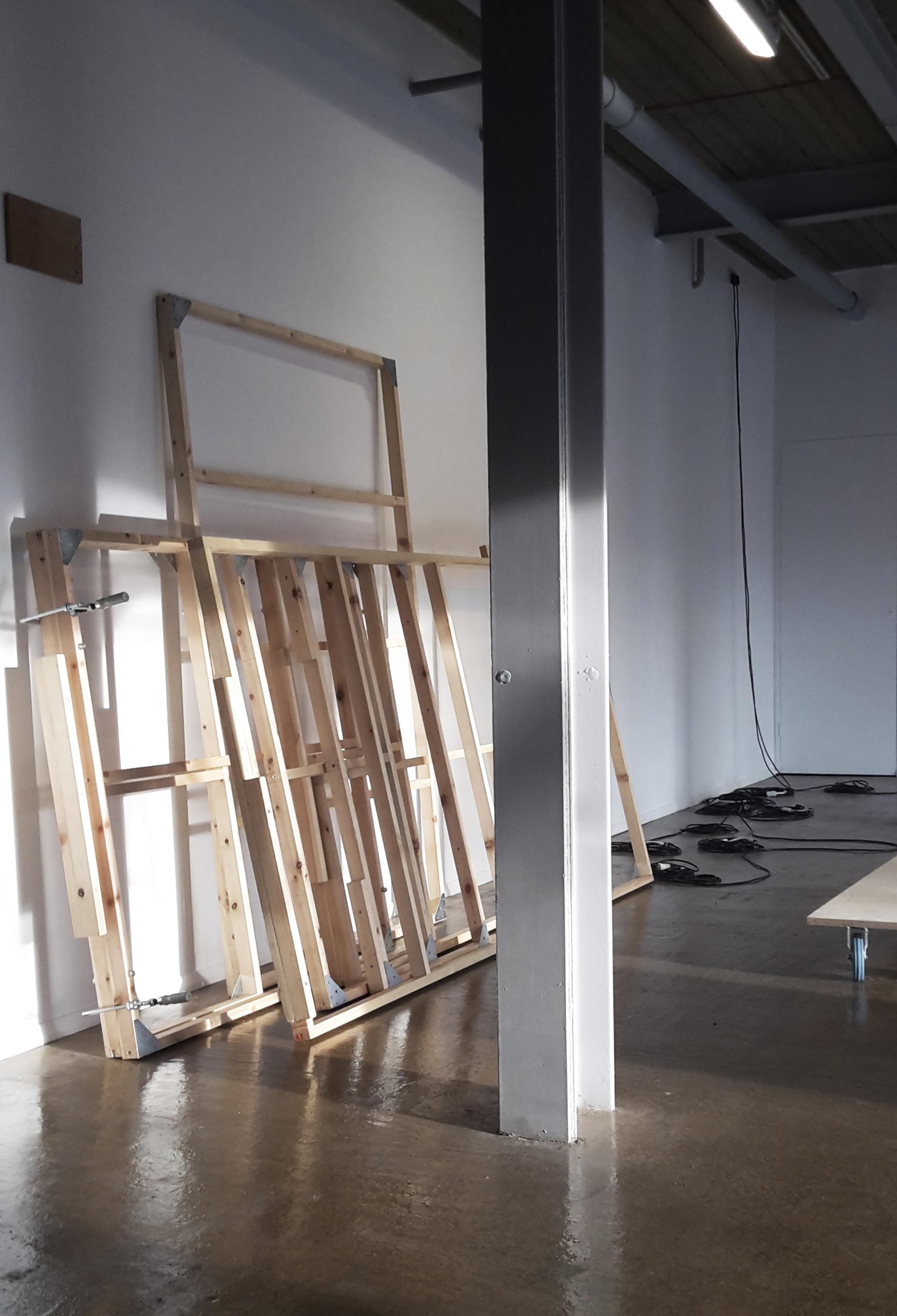
No Dark Things (2019)
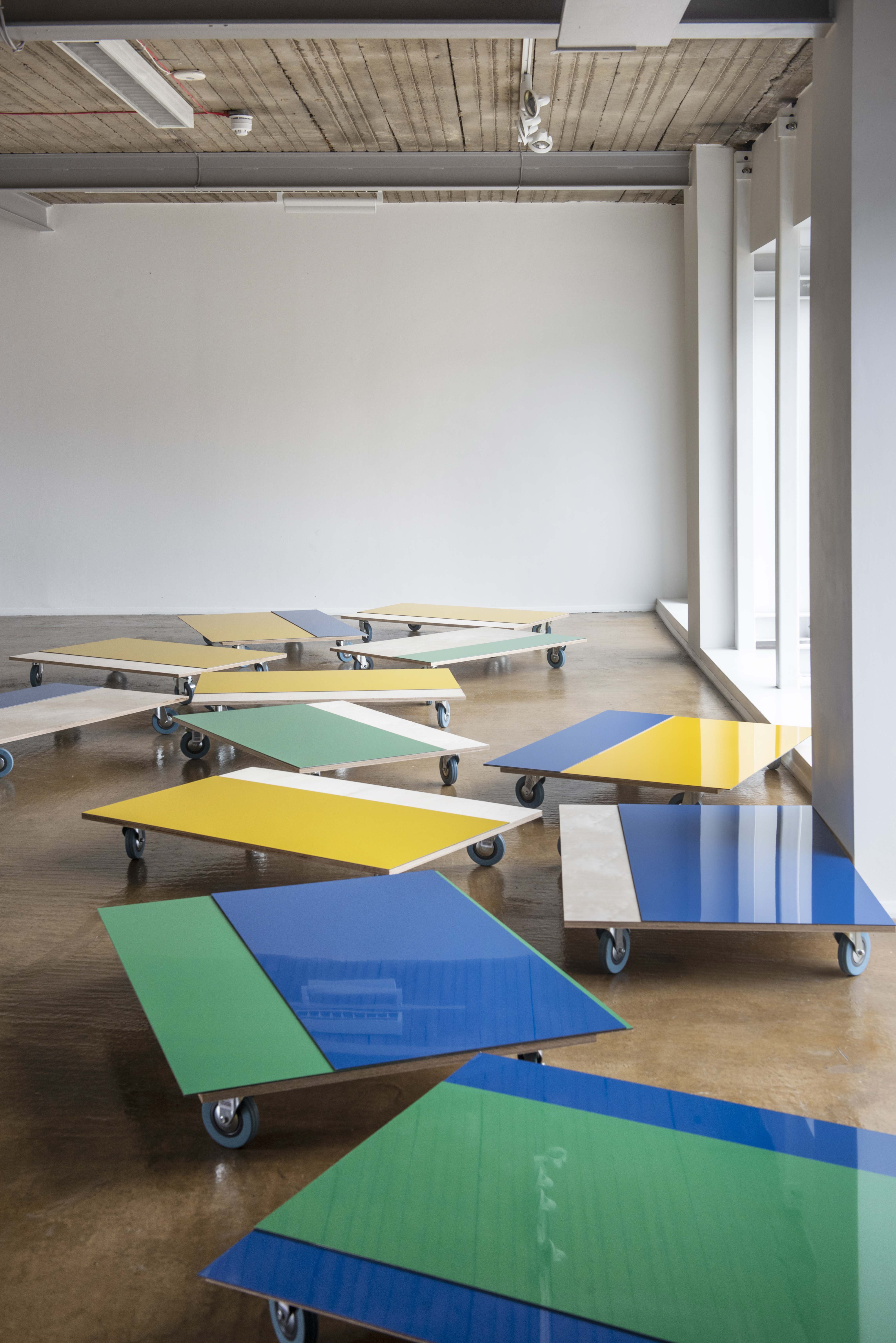
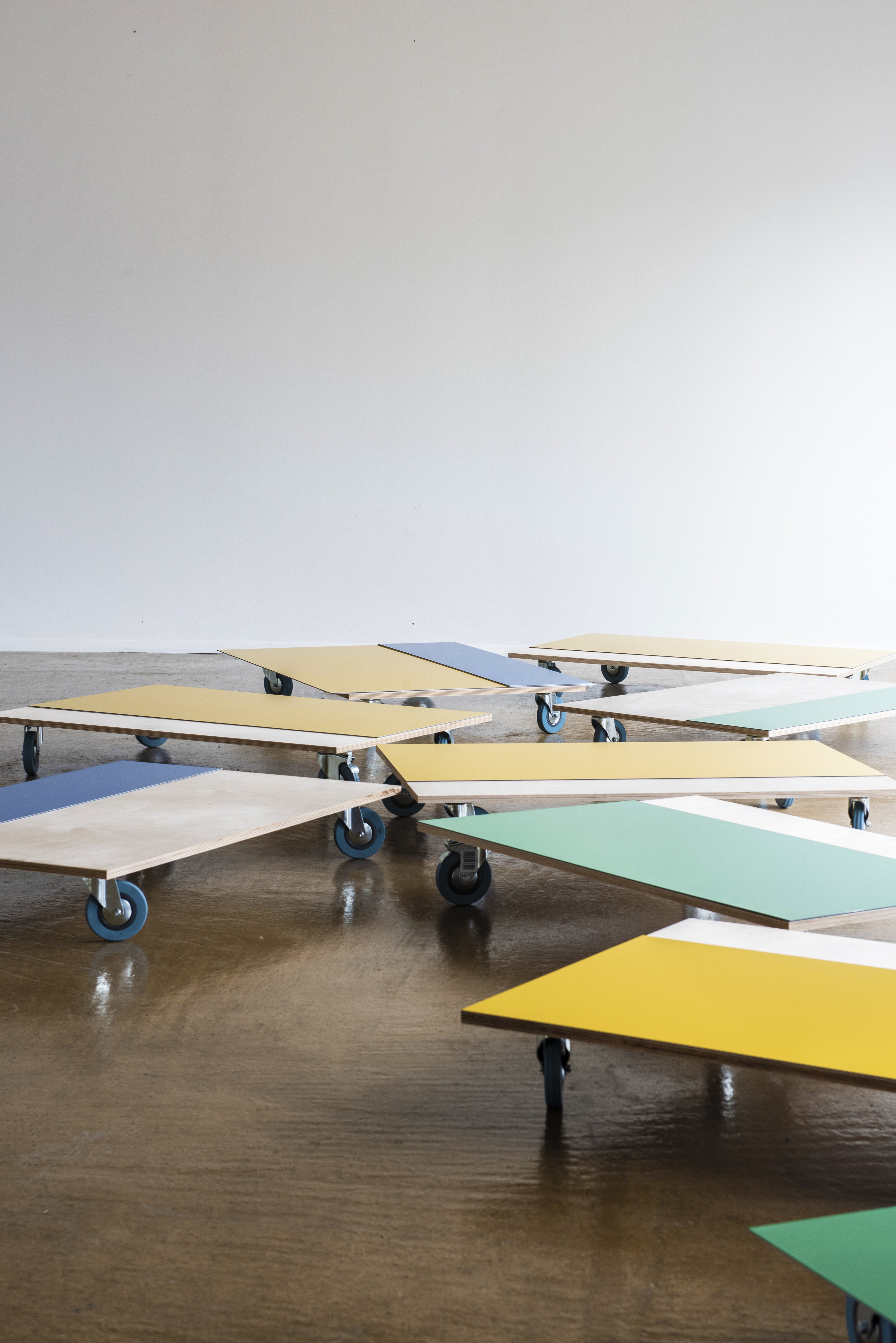
A series of mobile, flat-pack artworks were remodelled during the exhibition run in response to the gallery architecture. A final remix version of the show was presented at finnisage.
‘No Dark Things’ and ‘The Remix’ could be experienced as independent exhibitions within a single location, and it was not essential to view both, in order to take away a desire to re-examine the transitory nature of daily life. However, Hathaway speaks an authentic artistic language of disturbances and interruptions that is best experienced in this time-based format, where new beginnings are threatened, promised and carried out. These tactics for change will continue as the structures move to future sites (Annie O Donnell, Saturation Point Projects 2019).
Exhibition at Platform A Gallery, Middlesbrough. Photography Jason Hynes.
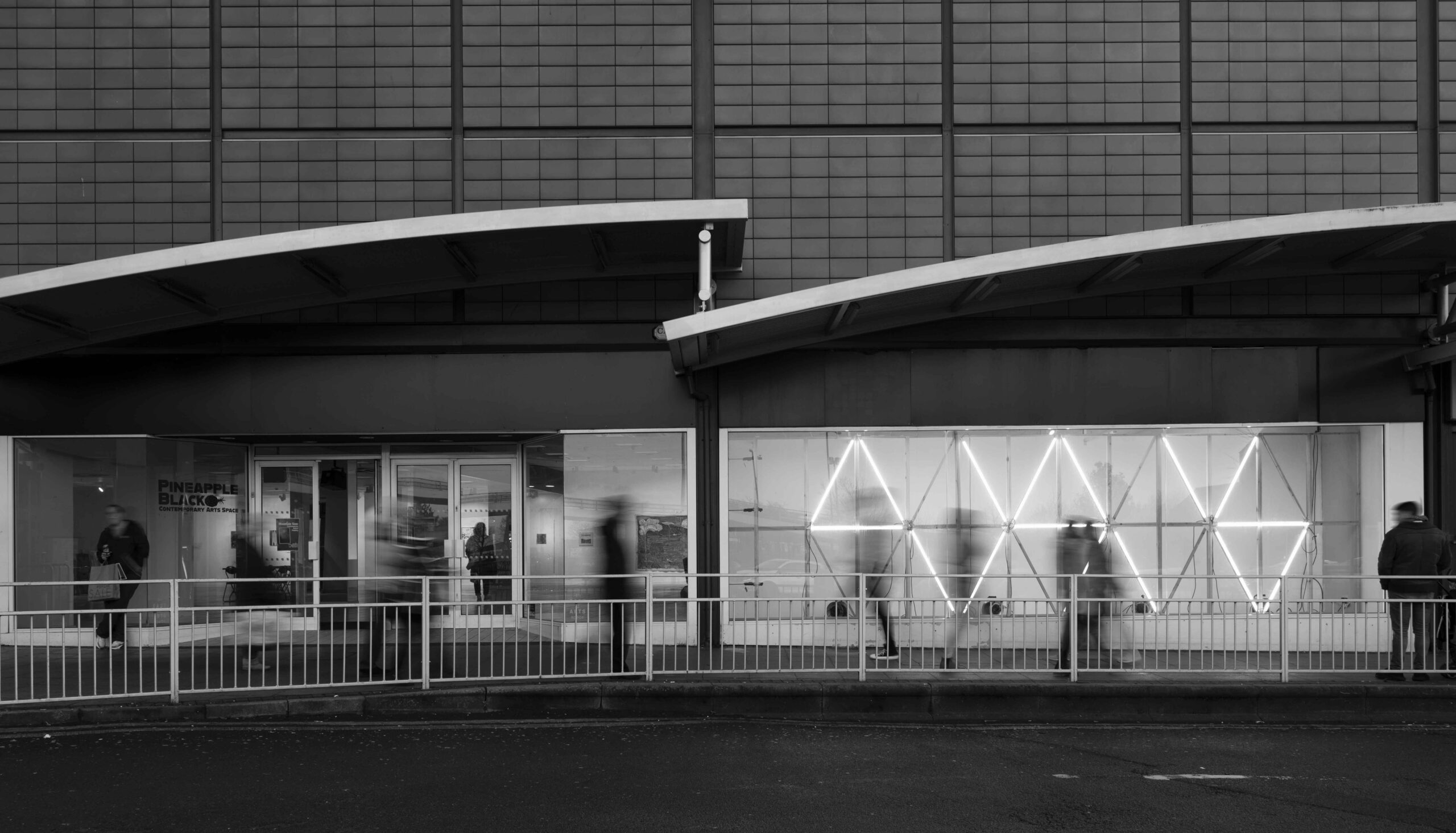
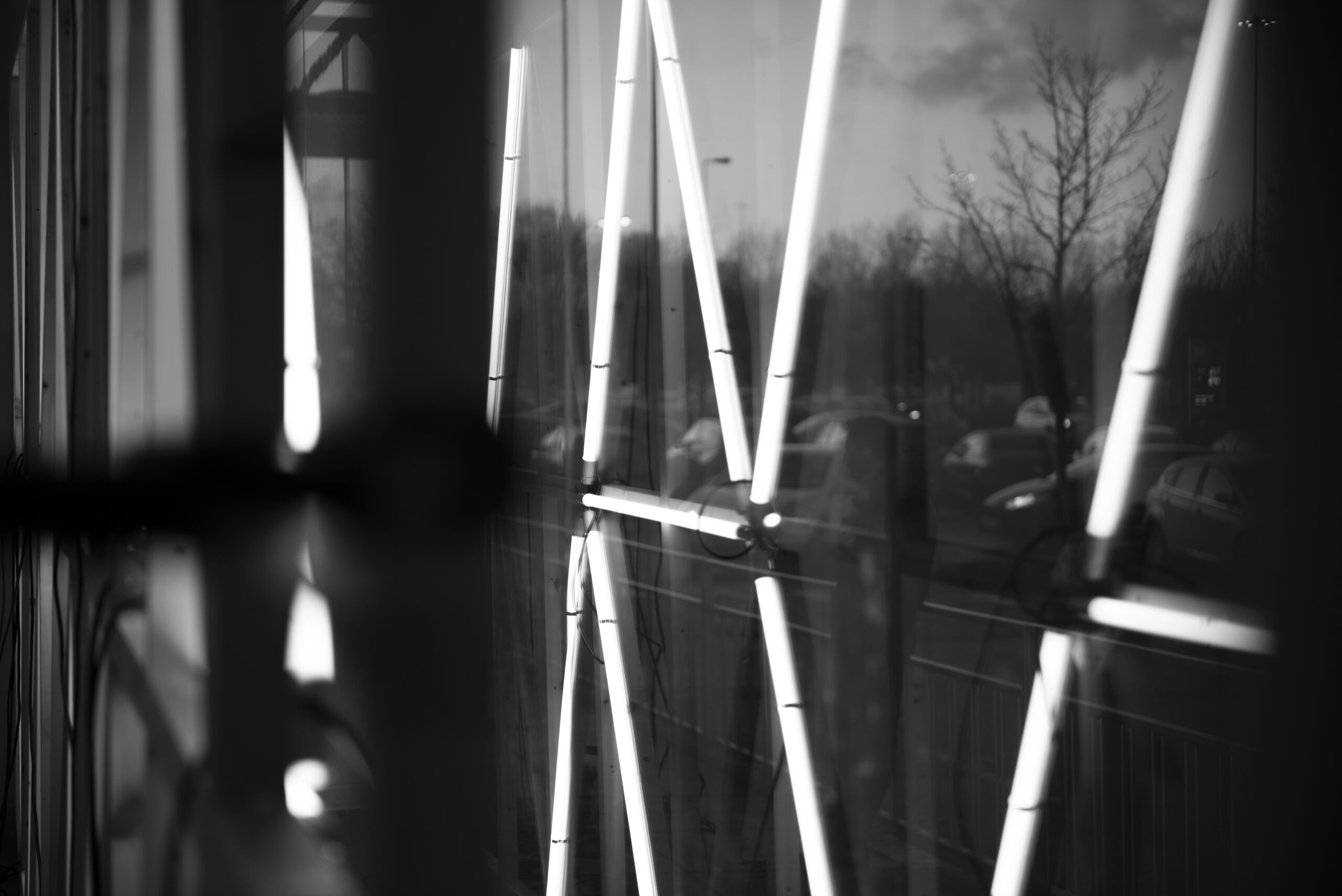
Where Have all the Good Times Gone? (2019)
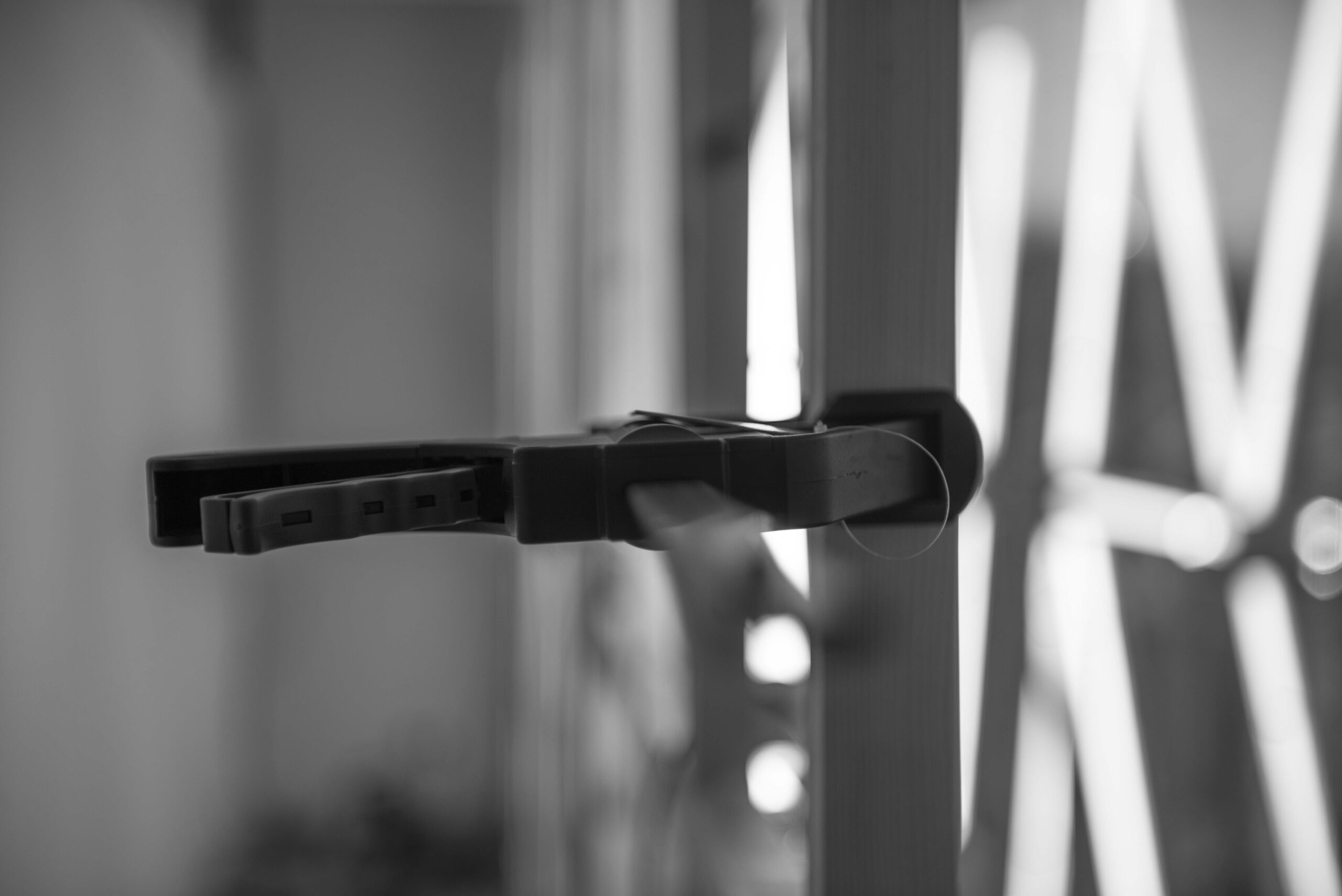
As a metaphor for internet shopping and an antidote to the dark nights, Where Have All The Good Times Gone? reduces the shop window experience to a binary black and white one. Using wooden frames and fluorescent lighting the static monotone piece is a move away from the artist’s best known works in block colour but retains his unfinished non-objective theme unique to each space. So, the 24/7 Window Gallery is transformed into something topical and accessible, but thought-provoking and charming. Less the reductive dystopia the artist originally envisioned but an optimistic awakening and exploration of alternative usage and thinking. The piece itself existing outside of the main gallery space. Indeed, from a distance after closing time the piece becomes a reimagining of Edward Hopper’s Nighthawks for the Amazon generation (Steve Spithray, Under the Hills Nearby).
Installation supported by Creative Factory.

An Ideal for Living (2015)
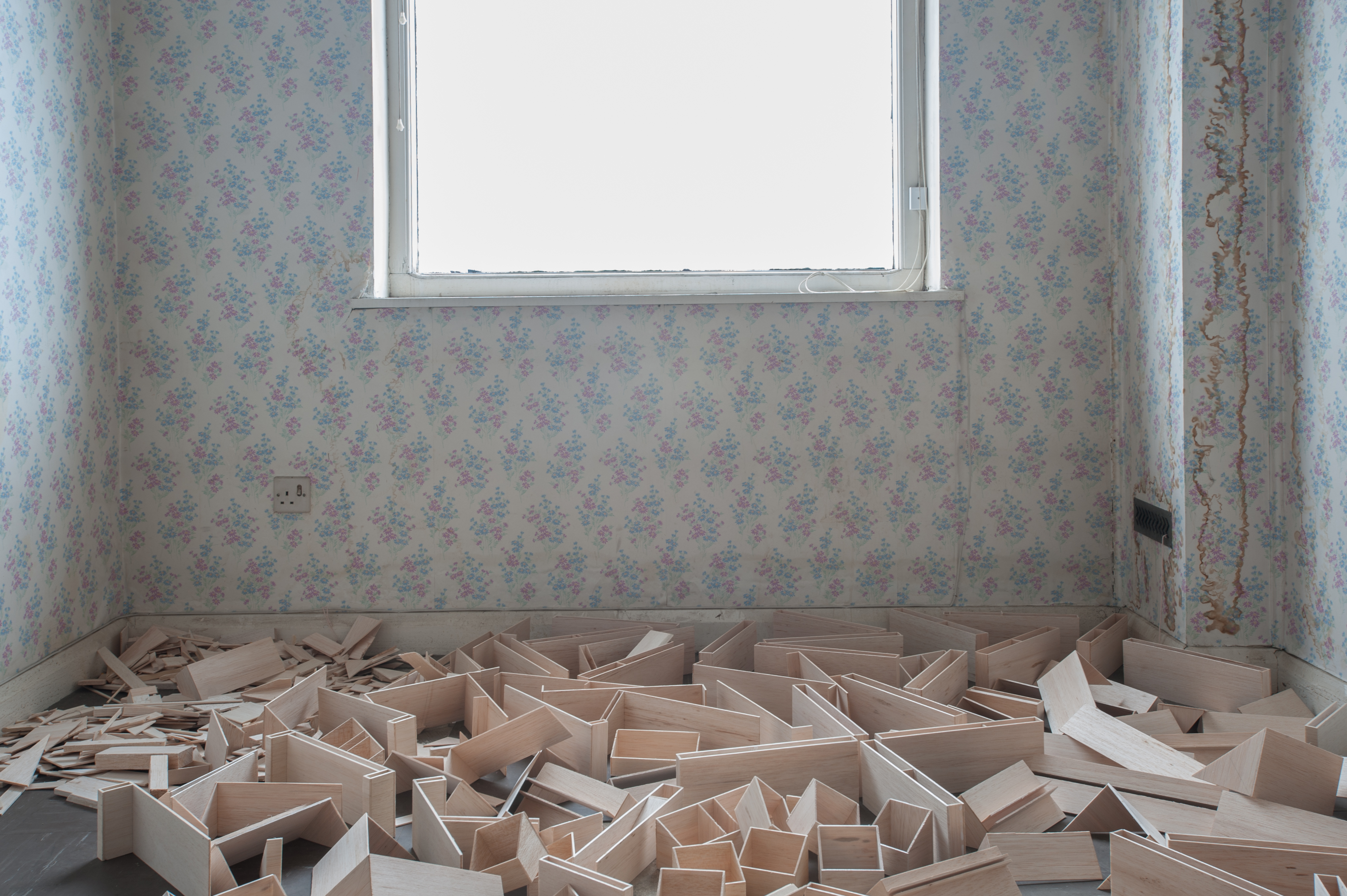
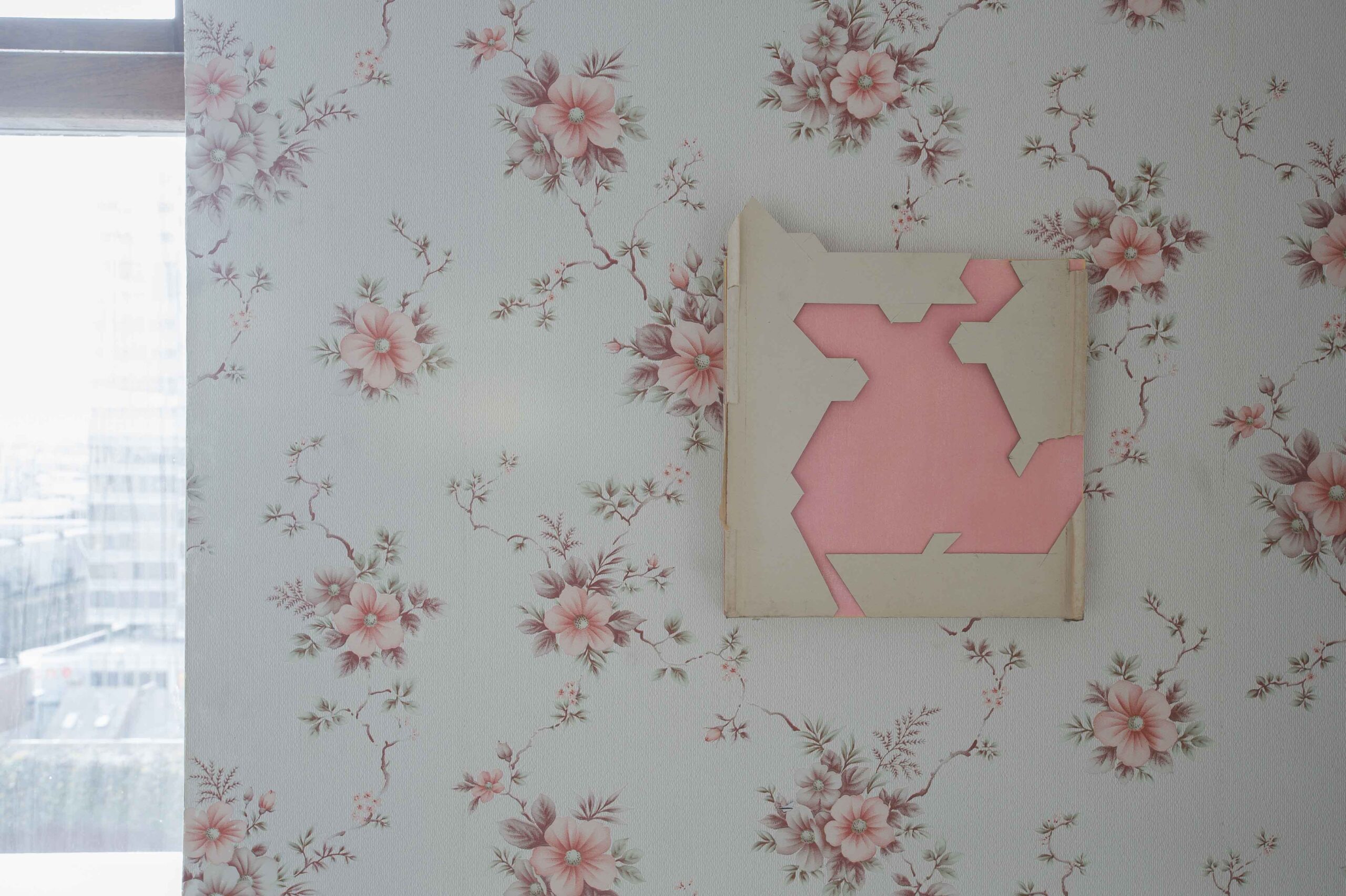
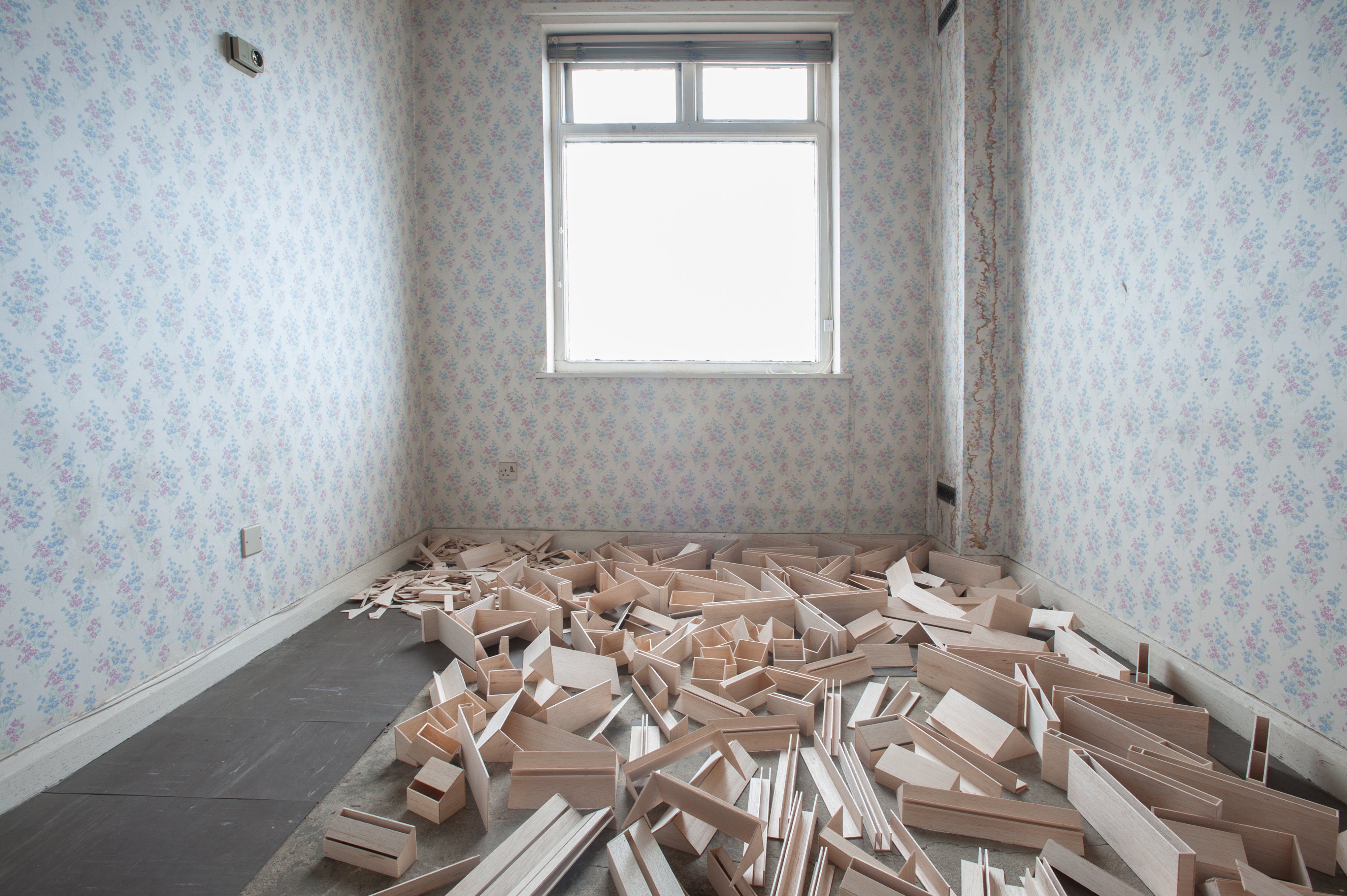
Installation, Dundas House, Middlesbrough.
Exhibition photography by Jason Hynes.
alan_hathaway_artiast
alan-hathaway-artist